About This Project
The seaweed fly Fucellia thinobia swarms visitors as they arrive at Alcatraz and the Farallon Islands. This species is thriving in cormorant colonies and their guano-rich habitats. Yet not a single voucher specimen has ever been officially documented in California’s collections! My project will survey for this species, deposit voucher specimens at the UC Davis Bohart Museum of Entomology, and sequence tissue samples to create the first genetic record.
Ask the Scientists
Join The DiscussionWhat is the context of this research?
I first encountered Fucellia thinobia as a tickling sensation on my face and legs while observing cormorants from a boat approaching the Farallon Islands. The island manager told me the swarming insects were “corm flies,” laying eggs on dead cormorants for their young to hatch in the nutrient-rich guano underneath. Outside of this encounter, I found only a single reference to the species, an online anecdote from entomologist Robert Kimsey, who confirmed the species’ association with cormorants on Alcatraz Island. F. thinobia has no representation in voucher collections or DNA libraries that I can find. Its family, Anthomyiidae, plays key roles in nutrient cycling and wrack decomposition, but corm flies remain unstudied. Without specimens or sequences, their existence in California ecosystems is effectively invisible. Documenting, archiving, and sequencing F. thinobia will fill this gap.
What is the significance of this project?
A fascinating fly that thrives in guano and carrion around a keystone species remains scientifically invisible. Documenting the previously unstudied Fucellia thinobia is significant in many key ways. It will expand our understanding of how these flies contribute to cormorant colonies, shoreline ecology, and nutrient cycling. This work opens the door to answering future questions about avian pathogen prevention, environmental nutrient pathways, carrion decomposition, cormorant life cycles, and even impacts of climate change. It will also strengthen biodiversity monitoring by generating reference sequences needed for eDNA surveys. Ultimately, this project adds an overlooked (yet difficult to ignore) insect to California’s biodiversity inventory, linking insect diversity to seabird conservation and ecological management of the Farallon Islands and beyond.
What are the goals of the project?
This project will document Fucellia thinobia by collecting voucher specimens from the Farallon Islands and Alcatraz, focusing on shoreline wrack and seabird colony sites where the flies are abundant. Funding will cover field costs and preservation supplies, ensuring specimens are archived in a recognized museum collection, along with tissue aliquots for downstream genetic analysis. The specimens will be sequenced through the California All Taxa Biodiversity Inventory, generating DNA barcodes that can be integrated into statewide databases. Fieldwork will take place November 2025 during scheduled USFWS access to the islands, with museum deposition and sequencing completed immediately afterward. The outcome will be permanent voucher records and genetic data for F. thinobia, making this species accessible to biodiversity monitoring and seabird-associated ecosystem research for the first time in California.
Budget
The voucher confirmation budget, along with the targeted field survey budget, will cover the USFWS Special Use Permit and the supplies we need for the collection of Fucellia thinobia flies. Our supply list includes sweep nets, aspirators, ethanol, vials, PPE, forceps, and archival-grade pinning and preservation materials.
The CalATBI budget item covers the cost of the California All Taxa Biodiversity Inventory environmental DNA sampling kit and lab work. The samples are processed and sequenced by CalATBI labs, with results entered into the statewide DNA barcode library.
Our boating budget covers transportation to the Farallon Islands with a USFWS boat charter partner. The budget also covers two round-trip ferries to Alcatraz Island.
Together, these items allow us to confirm, archive, and genetically document F. thinobia while contributing standardized data to California’s statewide biodiversity inventory.
Endorsed by
 Project Timeline
With a straightforward permitting process and USFWS routine boating schedule, fieldwork will begin in November 2025 and the project is expected to be completed within a month. Voucher specimens will be archived, samples sequenced through CalATBI, and results shared publicly. To ensure accessibility, we will prepare an article and species record for submission to an open-access journal.
Oct 04, 2025
Project Launched
Nov 02, 2025
Field Collection: Collect F. thinobia specimens on the Farallon Islands and Alcatraz.
Nov 09, 2025
Voucher Deposition: Deposit specimens and tissue aliquots in UC Davis Bohart Museum or another recognized collection.
Nov 16, 2025
DNA Sequencing: Submit samples to CalATBI for barcoding and upload results to statewide library.
Nov 30, 2025
Results Shared: Share accession numbers, sequencing records, and a fieldwork update with project backers
Meet the Team
Leia O'Dell
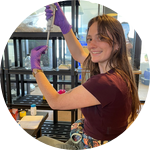
Leia O'Dell is a preschool teacher turned 2x biohackathon winner, biosecurity researcher, lab manager, and conservation volunteer. After 6 years of loving work in early childhood education, she changed careers and is pursuing her lifelong dream of becoming a biologist, driven by a passion for conservation, ecology, and evolution. With her sights set on the secret powers of fly pupal enzymes, she's become known in the Biopunk Community Lab as the "maggot girl," running experiments on green bottle fly maggot supernatants for potential applications in biosecurity and wound healing technologies. She pours her heart into this work and recently conducted a prize-winning experiment that analyzed the extracellular matrix of the pupal cuticle to uncover the connections between protein composition and aging.
Project Backers
- 5Backers
- 100%Funded
- $2,855Total Donations
- $571.00Average Donation