California Species Collection
ByCalifornia Institute for Biodiversity, and Experiment Foundation
Fast, flexible micro‑grants to help California field researchers — from students to seasoned naturalists — collect, voucher, and archive the specimens that power tomorrow’s biodiversity science.
Submitted Projects
29
Total Funding
$50,000
Submission Deadline
May 16, 2026
About This Grant
Voucher specimens are the physical receipts of biodiversity. Yet archiving them is chronically under‑funded, slowing discovery and undermining reproducibility. With a $75 ,000 pool, we’ll issue rapid micro‑grants ($500–$2,500) so researchers can:
-
collect and deposit voucher specimens
run focused surveys of Insecta, Funga, and soil biota
-
contribute samples to the California All‑Taxa Biodiversity Inventory (CalATBI)
-
engage students and community scientists in hands‑on field work
Every funded project posts open progress updates on Experiment, turning field notes into shared knowledge.
Grant Tiers
| Tier | Purpose | Amount* (up to) |
|---|---|---|
| Voucher confirmation | Specimen deposited in museum/herbarium | $500 |
Targeted field survey | Research helps inform statewide inventory Insects, Fungi, & Soil biodiversity | $500 |
ATBI sample pack | Project sends insect, funga, soil, & litter samples for processing and sequencing by CalATBI statewide ATBI Protocol Introduction ATBI Site Selection & Best Practices ATBI Leaf Litter Sampling ATBI Soil Sampling ATBI Insect Sweep Net Sampling ATBI eDNA Sampling | $1,500 |
*Awards can include DNA barcoding or soil eDNA sequencing for submitted material.
ELIGIBILITY:
- Work must occur within California.
- Open to university labs, tribes, NGOs, independent researchers, and dedicated amateurs.
- Researchers must submit a complete project via Experiment.com.
- Accepted projects must follow responsible collecting guidelines and deposit vouchers/samples in recognized repositories (see below).
ROLLING SUBMISSIONS: The goal of this small, fast grant program is to get these projects off the ground quickly. Projects will be reviewed on a rolling basis, until the end of the submission window or until the funding has been fully allocated, whichever comes first.
Projects will not be considered for the grant until they have gone through the Experiment.com review process and been approved per those requirements. This can take some time, so please don't wait until the grant deadline to submit. The sooner you start your project and get it approved by the Experiment team, the better your chances of receiving funding (use the "start a project" link).
All projects that are successfully approved by Experiment.com, regardless of whether they are allocated any funding through the grant, will launch their campaigns on or after July 1st, 2025.
FUNDING STRATEGIES: For projects that are allocated grant funds, the award size will be between $500-$2,500, but researchers can raise additional funding on the Experiment.com platform. All projects are Experiment.com projects, which means they are also eligible for crowdfunding and run on an all-or-nothing funding model. We encourage every researcher to plan for and implement a crowdfunding campaign, as not all projects will receive grants and not all grants will cover the full budget of a project. Projects which receive awards that only partially fund their target budget will need to crowdfund the remainder of their budget in order to receive any funding, in accordance with the Experiment.com all-or-nothing funding model. You may wish to consider the use of Stretch Goals in your project for a greater chance of meeting your minimum target budget and receiving any funding. Funding discretion rests with the Science Angel.
VOUCHERING GUIDELINES: If you have your own vouchering guideline or if you're using one provided by an archive or museum, please let us know in your submission or in a Lab Note tied to your project. Otherwise, please follow an appropriate guideline listed here.
- Invertebrates: COLLECTING AND PRESERVING INSECTS AND MITES: TECHNIQUES AND TOOLS EDITED BY M. E. SCHAUFF* Systematic Entomology Laboratory, USDA National Museum of Natural History, NHB 168 Washington, D.C. 20560 - https://www.ars.usda.gov/ARSUserFiles/80420580/CollectingandPreservingInsectsandMites/collpres.pdf; Morgan Brown, Sara Ottati, Valeria Trivellone. A non-destructive, fast, inexpensive, non-toxic chelating beads-based DNA extraction protocol for insect voucher specimens and associated microbiomes. Authorea. January 05, 2025 - https://doi.org/10.22541/au.173607115.51950228/v1
- Lichens: https://northwest-lichenologists.wildapricot.org/Curation-Materials
- Macrofungi: Halling, R. E. 1996. Recommendations for collecting mushrooms for scientific study. Pp. 135–141. In: Alexiades, M. N. and J. W. Sheldon (eds.), Selected Guidelines for Ethnobotanical Research: A Field Manual. The New York Botanical Garden Press, Bronx - https://sweetgum.nybg.org/science/projects/boletineae/wp-content/uploads/sites/6/2016/08/collecting_illustrated.pdf; https://namyco.org/publications/mcilvainea-journal-of-american-amateur-mycology/working-toward-a-north-american-mycoflora-for-macrofungi/; https://namyco.org/publications/mcilvainea-journal-of-american-amateur-mycology/making-scientific-vouchers-of-north-american-macrofungi/
- Plants: Liesner R. 1997. Field techniques used by Missouri Botanical Garden; collecting - https://www.tropicos.org/docs/MadCat/handbook.pdf; Royal Botanic Gardens, Kew. 2024. Technical Information Sheet 15: Making herbarium specimens. Board of Trustees of the Royal Botanic Gardens, Kew. 5p - https://brahmsonline.kew.org/Content/Projects/msbp/resources/Training/15-making-herbarium-specimens.pdf; Tippery, Nic. 2021. Voucher Specimens. YouTube. Webpage Accessed April 17 2025 - https://www.youtube.com/watch?v=T89HhjaISuE; USDA Natural Resource Conservation Service. 2018. Technical Note Plant Materials No. 70: Collecting and Processing Botanical Voucher Specimens. Boise (ID): USDA, NRCS. 5p. - https://www.nrcs.usda.gov/plantmaterials/idpmctn13305.pdf; USDI National Park Service. 2003. Fire Monitoring Handbook. Boise (ID): Fire Management Program Center, National Interagency Fire Center. 274p. - https://www.nps.gov/ngpfire/Documents/Fire_Monitoring_Handbook.pdf; Funk VA, Gostel M, Devine A, Kelloff CL, Wurdack K, Tuccinardi C, Radosavljevic A, Peters M, Coddington J. Guidelines for collecting vouchers and tissues intended for genomic work (Smithsonian Institution): Botany Best Practices. Biodivers Data J. 2017 Jan 30;(5):e11625. - https://doi.org/10.3897/bdj.5.e11625; https://www.cnps.org/education/botanist-certification/code-ethics
Grant Officers


How It Works
Click “Start a project” and choose California Species Collection Grant.
On the project page, make sure to explain:
- What you’ll collect & why it matters
- Field plan & voucher workflow
- Repository commitment (museum, herbarium, soil bank, etc.
- Budget request within $500–$2,500 (although researchers can raise additional funding via crowdfunding)
Submit; we’ll confirm eligibility, suggest edits, and move you to public launch.
Funded Projects
29
Bacterial Biodiversity Within The Ballona Wetlands
The Ballona Wetlands are the largest wetlands in Los Angeles. Within the last 80 years urbanization has...

Documenting Fungi in California's Dense Oak Woodland.
Mushrooms are plentiful at Santa Rita, a 1,700 acre ranch in the heart of the coastal Adelaida Mountain...

Uncovering hidden insect diversity associated with a likely undescribed gall-forming midge
Does a likely undescribed species of gall-forming midge (pers. comm. Ray Gagné) on Eriodictyon plants (Yerba...

Fungal diversity of Grass Lake, California's largest montane peatland
Grass Lake Research Natural Area, home to California’s largest peat-forming fen, is a rare montane ecosystem...
100%
funded
$3,700
goal
0
lab notes
Vouchering carnivorous plants in Mendocino County
Mendocino County, California, is home to several native and non-native carnivorous plant species. This project...

Feeling Salty: What Insects Thrive in the San Francisco Bay Area's Former Salt Ponds?
The San Francisco Bay Area's salt ponds represent a vital part of California's history and biodiversity...

Under the cormorant's wing: Sequencing California's missing fly
The seaweed fly Fucellia thinobia swarms visitors as they arrive at Alcatraz and the Farallon Islands. This...
Discovering the fungal diversity of the Jepson Prairie Preserve
Biodiversity surveys often overlook fungi despite their importance. California’s Fungal Diversity Survey...

Epiphytic cryptogam communities on San Bruno Mountain
San Bruno Mountain in the San Francisco Bay Area has sharp microclimate contrasts from summer fog. These...

The Russell S. Woglum collection: Preserving California's plant legacy through student curation
The Herbarium at California Botanic Garden aims to curate and digitize the collections of Russell S. Woglum...
Biodiversity of Serpents in Northern California
I frequently come across live and roadkill snakes in Northern California while roadcruising (herping). Vouchering...

The evolutionary history of Banana Slugs (Gastropoda: Ariolimax): Native California slugs with a story to tell
The evolutionary relationships of California Banana slugs (genus Ariolimax) are unknown and unpublished...

Tick Walks: Population and seasonal dynamics of California ticks
Join us as we develop a community partnership with Bay Area community biology labs to collect and test ticks...

Specialist bees of the Californian deserts: Are they still here?
Specialist bees collect pollen from a narrow set of plants. Southern California’s deserts once hosted diverse...
Moths from a flame: Surveying moth ecological succession as a factor of plant succession post-fire
I am studying the relationship between moths and plants in prescribed burned and unburned meadows at the...
Salinas Living Earth Workshops
Healthy soil is the foundation of healthy communities. Working with Salinas community members, participants...

Quantifying leaf beetle communities in the Diablo Range, CA
Natural History Museums (NHM) are critical to biodiversity research, and increasingly in evolution, genetics...

Documenting unique plant and insect species within Siskiyou County's biodiverse landscape
The biodiversity in Siskiyou County is inadequately documented because of prior inaccessibility. We seek...
Macrofungi of the California archipelago
The eight islands of the California Archipelago are a well-studied biodiversity hotspot — but we know almost...
Describing new scorpion species in California through field collection
California is a global hotspot of scorpion biodiversity. My preliminary surveys have revealed 20+ potentially...

Using eDNA to examine protected California species in streams at Hastings Reserve
Hastings Reserve is home to three streams that provide critical habitat for sensitive native species. Through...
Expanding our understanding of California's native Armadillid isopods
Native isopods of the US have been largely neglected with many species having not even been described or...
A study on the neglected aquatic isopods of California: Bridging gaps in biodiversity research
In scientific history, aquatic isopods have been an overlooked taxa. Recently there has been a breakthrough...

What biodiversity is hiding in Northern California’s un-sampled forests?
Large regions of Northern California are as listed as "Un-sampled" on the CA Biodiversity Database. Lets...
Uncovering hidden biodiversity across California’s Eastern Sierra
Little is known about biodiversity in the soils and leaf litter of California’s Eastern Sierra. I will collect...
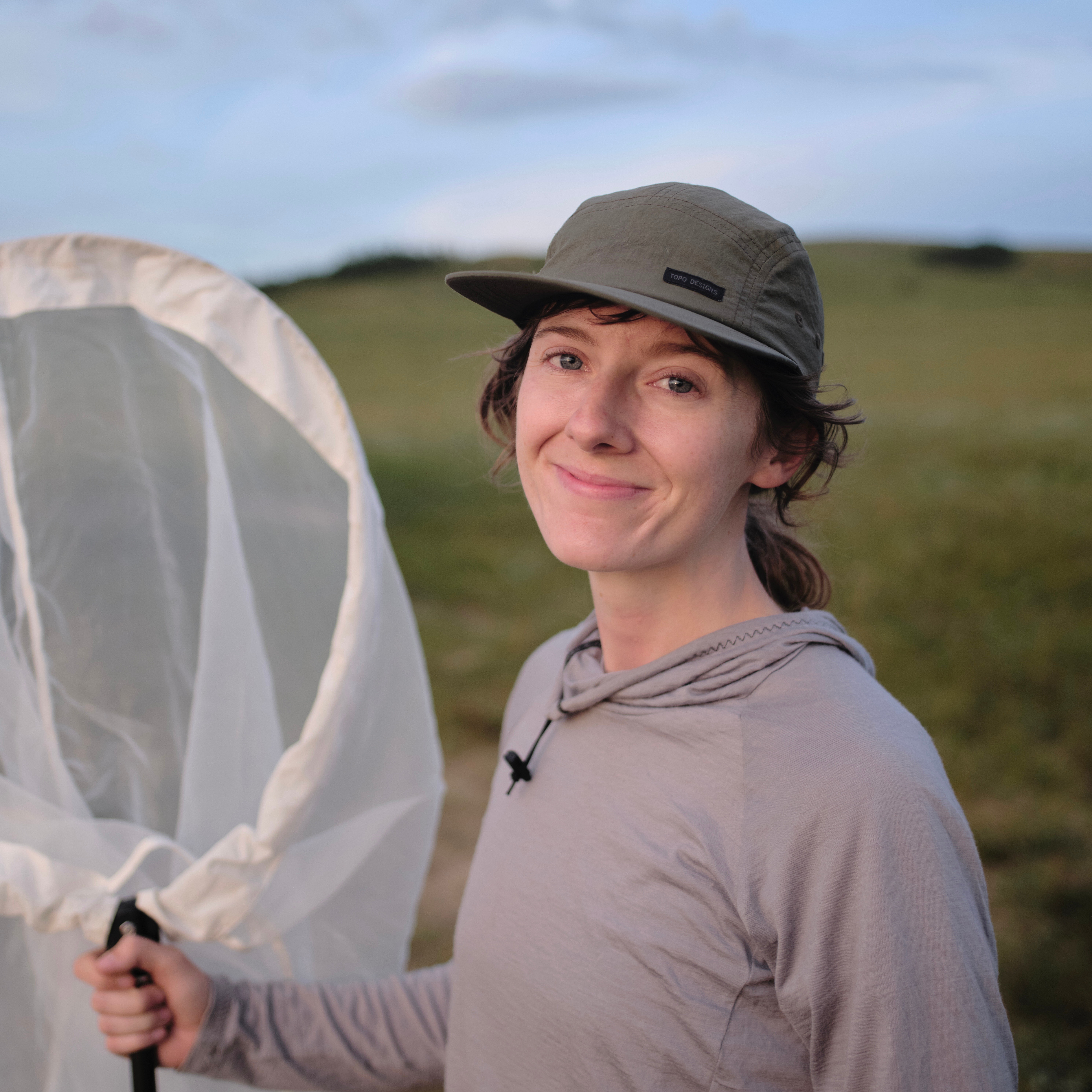
Uncovering fungal biodiversity from contaminated brownfield and superfund sites in Southern California
Fungal biodiversity in Southern California remains poorly documented, particularly in contaminated soils...

104%
funded
$2,490
goal
0
lab notes
Tiny worlds in desert moss: Microbes and microfauna in biological soil crusts
Desert mosses live closely with lichens and other microorganisms, together performing vital ecosystem services...

Can biome logs transform biomass from a problem to soil-ution?
As catastrophic megafires and flooding intensify across the western United States, fungi and other microbes...
Surviving the seasons: Photosynthesis in desert mosses across two desert ecosystems
Biological soil crusts—communities of mosses, lichens, and microbes—stabilize soils, retain water, and regulate...

About The Supporters


 Experiment Grant Programs
Browse grants available through Experiment
92
grant programs
$3,430,224
total grant funding
597
projects supported