About This Project
Many animals find their symbionts in the environment, but where do those bacteria come from? I will test whether adult fish locally enrich their surroundings for the next generation and track this process down to the strain-level.
Ask the Scientists
Join The DiscussionWhat is the context of this research?
Where do luminous symbionts go between fish hosts, and does their secret life in the environment shape which strains the next generation finds?
What is the significance of this project?
From coral reefs to our own guts, environmentally acquired microbes shape animal life. What better way to uncover the basic rules of these symbioses than with bacteria that literally glow?
What are the goals of the project?
Where are symbionts available to new hosts? I want to uncover where symbionts go after being shed by adults, where larvae may find them, and whether we can track this journey at the strain level.
Budget
Funding will support the molecular tools and fieldwork needed to follow P. mandapamensis from fish into the environment. qPCR reagents, species-specific primers and probes, DNA extraction supplies, and consumables will allow me to quantify the symbiont across existing and future field samples and test whether adult fish create local hotspots. Sequencing and molecular supplies will support strain-level tracking by comparing strains found inside individual fish with those they release into the environment. Funding will also support a return field season in Okinawa, Japan, where I can build on these findings with targeted sampling of adult fish and their surrounding environment. Together, these resources will let me move from asking where this symbiont occurs to testing how individual strains move from established hosts, through the environment, and toward the next generation.
 Project Timeline
This work is foundational to my PhD, so all projects will be completed as part of my dissertation.
Jan 04, 2027
Create species-level qPCR protocols to be used on my field samples
Mar 01, 2027
Establish molecular marker which can be used for strain-tracking
May 03, 2027
Travel to Okinawa, Japan to collect samples
Sep 06, 2027
Use qPCR on field samples and determine whether glowing symbionts are locally enriched around adult fish
Nov 01, 2027
Use sequencing for strain tracking to follow symbionts from individual fish into the surrounding environment
Meet the Team
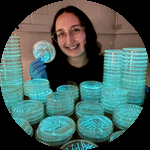
Emma Roman
- Career Stage: PhD candidate in Biology at Temple University.
- Why I care about science: I love science because curiosity is deeply human, it reveals the beauty in the messiness of life, and it gives us a shared language of curiosity for exploring a world we’re all connected to.
Lab Notes
Nothing posted yet.
Additional Information
Subdisciplines of science: Microbial ecology, symbiosis, host–microbe interactions, community ecology, marine ecology, microbiome assembly, and model system development
Project Backers
- 0Backers
- 100%Funded
- $10,000Total Donations
- $0Average Donation