About This Project
Soil looks like one brown background, but water, minerals, organic matter, roots, fungi, bacteria, and decaying plant material all change how it reflects light. I will build a low-cost benchtop soil spectra scanner and use it to measure controlled soil samples across moisture, and texture. The output will be an open hardware recipe, calibration protocol, pilot dataset, and analysis notebooks that help hyperspectral biology researchers test faint biological signals against real soil backgrounds.
Ask the Scientists
Join The DiscussionWhat is the context of this research?
Biological signals have usually been measured up close, through microscopes, lab assays, or direct sampling. Hyperspectral biology expands that view by measuring how molecules and organisms reflect or absorb many wavelengths of light, revealing features ordinary RGB cameras miss. But hyperspectral cameras often cost $10,000 to $100,000, limiting access for small labs and early experiments.
Recent work showed that engineered bacteria with hyperspectral reporter molecules could be detected outdoors from up to 90 meters away in a 4,000 m² image, but only by separating the signal from backgrounds like dirt and sand. Soil is a useful first target: water, minerals, organic matter, roots, fungi, microbes, plant residues, texture, and surface roughness all affect reflectance.
My hypothesis is that a low-cost, controlled-light benchtop scanner can produce repeatable soil reflectance curves that separate major background changes, especially moisture, texture, and organic matter gradients.
What is the significance of this project?
Hyperspectral biology needs more than better reporters. It needs cheap instruments, calibration protocols, and public datasets that let researchers test whether a biological signal can be separated from real-world backgrounds.
This project is useful because it lowers the barrier to entry. A researcher, community lab, classroom, or independent group should be able to reproduce the scanner, collect soil spectra, and compare their data against an open pilot dataset. The grant program says it is interested in early, cross-disciplinary, tool-oriented, field-building projects where a small grant makes a real difference. This is exactly that kind of project.
The project also avoids the riskiest parts of hyperspectral biosensing. There will be no engineered organism release, no drone deployment, and no field biosensor claim. The first step is simpler: measure the soil background well.
What are the goals of the project?
I will build a low-cost benchtop scanner to measure soil reflectance spectra under controlled lighting. The prototype will use an off-the-shelf mini-spectrometer, fixed sample geometry, white/dark references, and a light-controlled chamber. Repeatability will be tested by rescanning soil cups across sessions.
I will create a pilot dataset from about six source soils scanned at controlled moisture levels. A subset will be scanned across compost-amendment levels by dry mass to test detection of organic-matter-like background changes, without claiming exact soil organic matter for every replicate. About six soils will receive external testing where feasible, including organic matter, carbon/nitrogen, and texture.
Analysis will convert raw readings into reflectance curves, quantify repeatability, and test models for separating moisture, texture, and compost gradients. The release will include spectra, metadata, code, notebooks, bill of materials, enclosure files, and a build guide.
Budget
This budget funds the minimum complete version of the project: one working soil spectra scanner, a repeatable calibration workflow, a pilot soil spectra dataset, and an open release of the hardware and analysis files. The core spectrometer hardware is relatively inexpensive, but the real costs are controlled illumination, calibration references, enclosure iteration, soil handling, external validation for a small subset of samples, shipping, taxes, and Experiment platform/payment fees. The base project will not build a drone camera or a full imaging hyperspectral system. It will build a reproducible benchtop scanner for calibrated soil reflectance curves.
Endorsed by
 Project Timeline
Sep-Oct 2026: I will finalize the scanner design, order parts, assemble the prototype, and validate white/dark calibration.
Nov 2026-Feb 2027: I will collect soil spectra across moisture and compost gradients and send source soils for validation tests.
Mar-May 2027: I will analyze repeatability and separability, then release the open hardware files, protocol, dataset, notebooks, and final report.
Jul 31, 2026
Project Launched
Sep 01, 2026
Prototype design and bill of materials complete
Oct 01, 2026
Scanner assembled and reference scans collected
Nov 01, 2026
Calibration workflow validated
Dec 01, 2026
First moisture-gradient soil spectra collected
Meet the Team

Sean Jungbluth
I’m a professional scientist, explorer, and tinkerer. My work sits at the intersection of environmental biology, microbial genomics, oceanography, low-cost instrumentation, and computational tools for understanding life at large scales. I’m PI/Group Lead at the Estuary & Ocean Science Center at San Francisco State University, where I study biodiversity and microbial life across marine, estuarine, deep-sea, subsurface, and other hard-to-sample environments.
I’m especially interested in making advanced biological measurement cheaper, more reproducible, and more useful outside a narrow set of well-funded labs. My research and tool-building have used eDNA, metabarcoding, genomics, machine learning, field sampling, and open data standards to connect physical samples with biological identity and ecological context.
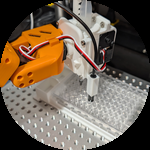
That same motivation shows up in my current hands-on projects. Through BioKEA, I’ve been working on tools like BugPicker, which adapts open-source pick-and-place automation to image, sort, and array insect specimens for DNA barcoding. The goal is practical: lower the cost and labor required to catalog biodiversity, while keeping the link between specimen, image, plate position, and sequence data traceable.
For this project, I’m bringing that same approach to hyperspectral biology: start with a concrete biological background, build a low-cost instrument, publish the design and data, and make the work useful to other researchers. More about my background is at https://seanjungbluth.me/.
Project Backers
- 2Backers
- 100%Funded
- $5,025Total Donations
- $2,512.50Average Donation