About This Project
Marine heatwaves (MHWs) are on the rise globally, threatening habitat-forming species with mass mortality events. MHW metrics are constructed from long-term local climatology rather than their biological impacts. We will build an alternate biological Marine Heatwave (bMHW) metric based on how invertebrate thermal tolerance varies with time. We will test our approach with a well-studied gorgonian (Paramuricea clavata) in the Mediterranean that has suffered repeated mass mortality.
Ask the Scientists
Join The DiscussionWhat is the context of this research?
Mass mortality events in habitat-forming benthic organisms (e.g. shellfish, coral, and seagrasses) are occurring in the wake of MHW events, threatening the ecological function and ecosystem services of marine habitats. Despite their major ecological impacts, MHW metrics are heavily based on local historic climatology and are not intended to incorporate biological variation in heat tolerance. One solution is the application of Thermal Death Time (TDT) curves, which describe a predictable relationship between temperature tolerance and duration of exposure. TDT curves can be used to predict survival probability from field temperatures, yielding predictions of the biological impact of MHWs. The gorgonian Paramuricea clavata is an ideal species to test the application of TDT curves as a living threshold, as over twenty years of population and temperature monitoring in the Mediterranean has revealed a 45% regional decline in biomass in response to repeated heat stress.
What is the significance of this project?
Rather than relying on climatology and costly species monitoring to infer the extremity of a given MHW, a biological MHW (bMHW) index based on TDT curves promises to identify where and when mortality is likely to occur. By providing a mechanistic link between thermal exposure and biological impacts, managers could prioritize areas for monitoring, conservation or restoration. Thermal refugia revealed by the model could serve as the basis for implementing marine protected areas or other regulations. Because TDT parameters are easily obtained from standardized lab assays, this approach can be transferred to other critical habitat-forming marine species. We will also test how much biological detail is needed for accurate predictions: whether a species-level TDT curve is sufficient or depth- and population-specific tolerance improves skill, and how predictions change when using remote sensed data compared to high-resolution temperature loggers co-located with monitoring sites.
What are the goals of the project?
Our overarching goal will be to build and validate an operational heat stress model for P. clavata that will predict the timing, spatial extent, and lethality of bMHWs. We are currently building TDT heat stress models for P. clavata from existing data, and over the next year, we will predict lethal events from temperature records at long-term monitoring sites to compare predictions against observed mortality. From these predictions, we will build a bMHW index of mortality severity and evaluate how it compares with traditional MHW metrics across sites, depths, and years using existing monitoring data. To understand what information is needed for accurate predictions, we will compare depth and population-level TDT parameters. Further, we will evaluate whether mortality events are clumped in time and space, ratcheting up risk for populations. At the conclusion of our project, we will produce a public-facing dashboard to forecast real-time mortality.
Budget
Co-located mortality monitoring, temperature records, and thermal tolerance data for P. clavata are held by co-investigators at the University of Barcelona (UB) and Institut de Ciències del Mar (ICM). The US-based PI brings expertise in dynamic thermal tolerance (TDT) modeling. Combining these unique data sources and novel modeling framework to meet ecological management goals will require in-person collaboration. Funds will support: 1) round-trip airfare, lodging and per diem for the PI and one of the team members based in Lisbon for a three-week stay at UB, during which knowledge exchange will occur, 2) a two day working-group workshop at UB, covering meals and local travel for team members, when the whole team will meet to decide on critical modeling decisions, align models with management goals, and plan the manuscript, and 3) a contribution toward open-access publication so results are freely available.
Endorsed by
 Project Timeline
Over the first five months of the project, we will remotely organize monitoring, temperature, and physiological datasets and prepare for the workshop. At the project midpoint, the team will meet at UB for a two-day workshop to formalize analytical decisions, meet with stakeholders, and plan next steps for a manuscript. In the last half of the project, we will write and submit an open-access manuscript, release an online dashboard, and outline future tests in other marine species.
Oct 29, 2026
Project Launched
Mar 31, 2027
Harmonization of environmental and species monitoring data prior to workshop
Apr 15, 2027
Planning completed for Gorgonian Heat Stress Workshop and collaborative visit
May 01, 2027
Gorgonian Heat Stress Workshop, University of Barcelona
Jun 01, 2027
Finalization of modelling framework post-workshop
Meet the Team
Affiliates
Affiliates
Affiliates
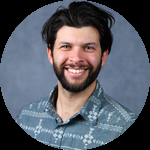
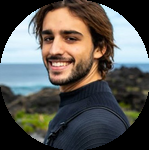
Dr. Villeneuve (PI, Friday Harbor Labs, University of Washington) specializes in modeling thermal stress of marine organisms. Team members at the University of Barcelona (Drs. Capdevila, Linares, and Zentner), University of Lisbon (Dr. Gómez-Gras), and Institut de Ciències del Mar (ICM-CSIC) (Drs. Garrabou and Figuerola-Ferrando) are members of the MedRecover research group and bring species- and system-level expertise in gorgonian population dynamics, trait-based ecology, and physiology.
Andrew Villeneuve
Dr. Andrew Villeneuve is a marine biologist based at Friday Harbor Labs (University of Washington, USA). He is interested in how marine organisms are responding to heatwave events through the lens of physiology. He uses experimental and modeling tools to build predictive models of ecophysiological stress in marine invertebrates, with the goal of applying these models for applied ecological and fisheries management needs.
Andrew earned his PhD from the University of New Hampshire, where his research focused on building heat stress models for oysters and gorgonians. Previously, he studied local adaptation of a widely distributed marine snail to understand the role of evolution in driving population-level responses to climate change. He was also a 2021 Knauss Marine Policy Fellow with NOAA Fisheries.
Andrew is a co-team lead for the Thermo ToleRate working group through the Environmental Data Science Innovation & Impact Lab (ESIIL), which seeks to understand the diversity of organisms' heat stress adaptations and test the ability for current heat stress models to predict population crashes in response to extreme heat events. He is an active member of the Ecological Forecasting Initiative, in which he served as a co-chair for the early career working group from 2024-2026.
Yanis Zentner
Yanis Zentner is a marine ecologist at the University of Barcelona. He is interested in how marine heatwaves are reshaping Mediterranean benthic communities, and in how conservation can keep pace with these changes. His PhD focused on octocoral-dominated coralligenous assemblages, combining long-term demographic monitoring of habitat-forming gorgonians with trait-based approaches to community functioning. Working across sites under different levels of protection, he examined how local pressures interact with climate change and explored conservation actions such as adaptive management and assisted recovery. His work aims to bridge population and community ecology to inform the management of coralligenous habitats in a warming Mediterranean
Laura Figuerola Ferrando
Laura Figuerola Ferrando is a marine ecologist and postdoctoral researcher at the Institut de Ciències del Mar (ICM-CSIC, Barcelona). She is interested in understanding the processes that shape the distribution of marine benthic species and communities across spatial scales, from shallow coastal ecosystems to deep-sea habitats. Her research explores how these distribution patterns emerge and how they may change over time under environmental change. She combines ecological monitoring, underwater imaging technologies, field surveys, and spatial modelling to investigate the relative importance of abiotic drivers and biotic interactions in shaping biodiversity patterns.
She is particularly interested in habitat-forming species and the vulnerability of marine biodiversity to environmental change. By integrating approaches from spatial ecology, biogeography, and macroecology, her work aims to improve predictions of species redistribution and ecosystem change, supporting conservation and management in a rapidly changing ocean.
Pol Capdevila Lanzaco
Dr. Pol Capdevila Lanzaco is a Lecturer at the University of Barcelona (Spain), where he is a member of the Department of Evolutionary Biology, Ecology and Environmental Sciences and the Biodiversity Research Institute (IRBio). He is a quantitative ecologist who seeks to understand, predict and manage how species respond to global change, with a particular focus on Mediterranean marine ecosystems. Working at the interface between ecological theory and conservation, he combines long-term field monitoring of populations and communities with comparative analyses of demographic and functional data and statistical modelling, and translates the results into recommendations for management and conservation.
Daniel Gómez-Gras
Dr. Daniel Gómez-Gras is a Marie Skłodowska-Curie Postdoctoral Fellow at the University of Lisbon (Portugal), where he is a member of the Macroscope Lab. He is a marine ecologist whose research focuses on understanding the impacts of global change on marine biodiversity, with a particular emphasis on coral-dominated ecosystems. Working across tropical and temperate marine ecosystems and from local to global scales, he combines field-based studies of species, populations and community responses to environmental disturbances, particularly marine heatwaves, with large-scale analyses of biodiversity patterns, functional traits and extinction risk. His overarching goal is to advance our understanding of how marine ecosystems respond to global change and translate this knowledge into effective conservation and management strategies.
Lab Notes
Nothing posted yet.
Project Backers
- 1Backers
- 104%Funded
- $10,348Total Donations
- $10,348.00Average Donation