About This Project
Millions of people use recreational trails each year. With participation in hiking projected to increase by up to 113% in the United States by 2060, new trails are continually being developed. As a result, there is great potential for ecological effects. We're using birds to understand the effects of building trails and hypothesize that changes in community composition will occur. Results will inform trail design that minimizes effects on ecosystems while increasing recreation opportunities.
Ask the Scientists
Join The DiscussionWhat is the context of this research?
Participation in outdoor recreation grew by 27% over the past 10 years and continues to grow by over 4% each year. Trail construction is constantly expanding to meet these demands. Although trail users often visit recreational trails to interact with nature, view wildlife, and explore natural features, the ecological effects of trail building are largely unknown. Since trails often travel through sensitive natural areas that serve as hotspots for biodiversity, land managers are concerned about the potential impacts on these systems. Conducting research to guide sustainable trail development will be key to ensuring that natural ecosystems provide important wildlife habitat and can be enjoyed by future generations of trail users.
What is the significance of this project?
Trail building can risk ecological degredation and impact forest ecosystems. Maine has the largest contiguous forest east of the Mississippi River, estimated at 18 million acres, that provides critical habitat for many breeding birds and federally threatened species like Canada Lynx. It provides important breeding habitat for state threatened songbirds, including blackpoll warbler and Bicknell's thrush.
To guide future trail building that minimizes ecological impacts, we will record birds as bioindicators of the changes to forests before and after trails are built. Results will significantly advance the design of trails that minimize ecological impacts and promote landscapes that support both human use and wildlife.
What are the goals of the project?
Our goal is to expand our understanding of the effects of trail building on forest ecosystems. To accomplish this, we will select 10 study sites across the state of Maine where trail building will occur and record songs of breeding birds in 2026 and 2027, before and after trails are built. We will analyze recordings for changes in bird communities caused by trail building. We will partner with state and local resource managers to ensure that our results address current issues they face. Our results will ultimately guide trail development that protects sensitive wildlife species and ecosystem integrity while increasing trail-based recreation opportunities.
Budget
Your donation will fund the purchase of 10 recording units, the final step in reaching our goal of 40 recorders for this research. The Song Meter Micro 2 is a lightweight recorder with high quality microphones. The remaining recorders have been funded by grants received from Western Maine Audubon Society, Mid-coast Audubon Society, and Garden Club of America, highlighting our commitment to working with partners to ensure results are actionable to meet their needs.
In addition, donations will fund the purchase of batteries and SD cards for the recorders used in this study. Our $2,000 goal will allow us to purchase the remaining field equipment we need to carry out this research.
Endorsed by


 Project Timeline
Your donations will support the purchase of field equipment that will be used thorughout a two-and-a-half year student research project. Recorders will be used in June 2026 and 2027 to measure bird communities before and after trails are built. Results will be shared with partners in 2027 and published in 2028. The recorders we purchase will be available to future graduate students following project completion.
Sep 01, 2025
Project Launch
Apr 13, 2026
Project Launched
May 25, 2026
Deploy recorders before trail is built
Jul 01, 2026
Retrieve recorders and analyze data
May 24, 2027
Deploy recorders after trail is built and open to the public
Meet the Team

Affiliates
Affiliates
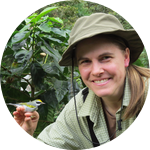
Evan Griffis
I'm a National Science Foundation Graduate Research Fellow pursuing a masters degree in Forest Resources at the University of Maine. I received my B.S. in Wildlife Biology from Michigan State University in 2023. Throughout my academic career, I've won awards for presentations at local and national conferences, published in a peer-reviewed journal, and received numerous grants for research projects. In my professional career, I've worked biological field jobs across the Western Hemisphere, from the Arctic tundra of Alaska to the rainforests of Belize, where I gained hands on experience and learned extensively about ecological systems. In addition to biological jobs, I've worked jobs in the recreation industry from trail building and maintenance to bike repair and ski instructing. My experience in both recreation and ecological systems make this an exciting project to carry out.
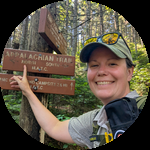
Amber Roth
I've been fortunate to be involved in research, monitoring, habitat management, and conservation planning for species associated with young forest habitats for over 20 years. My current research program at the University of Maine also includes forest bird response to forest management, American Woodcock migration and breeding ecology, understanding American Goshawk decline and distribution change, Bicknell's Thrush habitat ecology and management, and Golden-winged and Blue-winged Warbler habitat ecology. I enjoy sharing my research with a wide range of audiences and hope you find this current project to be as interesting and exciting as I do.
Jessica Leahy
I was born and raised in Alaska, adjacent to the second largest state park in the United States. As a result, I’ve always been curious about the connection between humans and forests. I research environmental attitudes and behaviors towards forests, forestry, and other natural resource management topics using a social psychology and communication approach. I tend to study four populations: outdoor recreationists, forest landowners, natural resource managers, and the “general public.” My current research portfolio includes several trail projects: this one, a study of resilient trail design on National Forests, a general population study of Maine's natural surface trail users, and a project on mountain biking as a rural economic development tool.
Lab Notes
Nothing posted yet.
Project Backers
- 10Backers
- 30%Funded
- $595Total Donations
- $59.50Average Donation