About This Project
We need a solution to give people the resources they need while keeping the planet in check. By creating a novel photobioreactor and algal cultivation guides, we can help people with sustainable food production at home! I aim to significantly reduce the dewatering costs of harvesting the edible algae in our photobioreactor significantly, while simultaneously making it low cost and open source. I also need to experiment with biofilm and tubular photobioreactors for my experiment.
Ask the Scientists
Join The DiscussionWhat is the context of this research?
I am a high school student that wants to use funds in order to fund biology experiments, including phycology. Algal cultivation systems in the current industry are of paramount importance, yet they are inefficient to some degree in a variety of ways. The extreme price of photobioreactor limits many people from cultivating algae at home. That being said, photobioreactors are of great importance in addressing sustainability issues, especially regarding climate change. We expect to help many researchers and citizens with our cheap, accessible, open source PBR. We also hope to measure the functionality of the PBR for home cultivation use as a product.
What is the significance of this project?
Microalgae and cyanobacteria are photosynthetic organisms able to convert Co2, water, and nutrients into valuable compounds. Microalgae are extremely useful for bioremediation and can have more protein than soybeans according to many sites. With an economically and energy efficient photobioreactor, citizens can cultivate superfood algae with applications in food, biofuel, feedstock, fertilizer, and much more. This experiment is meant to explore a novel photobioreactor (PBR) biofilm design with immediate effects on the scientific and citizen community at large. There are many sources investigating algae as a way to sustainable produce compounds; take NASA as an example. Furthermore, it is of great significance to explore the poorly understood algae biofilm system I am doing and compare it's biomass yield or sustainability to tubular photobioreactors. Fresh microalgae can be easily incorporated into our diets!
What are the goals of the project?
The funds that backers generously donate will go toward labor costs, material costs, and other essential expenses.
Our primary goals are to develop, validate, and release a novel photobioreactor. I also want to test which photobioreactor is the most efficient at cultivating microalgae (Tubular airlift or biofilm). Each has their own advantages and disadvantages, which I will experiment with by testing grams per liter of dry algal biomass to determine the most effective one. Lastly, we plan to inspire online audience by creating DIY photobioreactor plans for people to use. Spirulina has the potential to impact many facets of our lives in a positive manner.
Also, tubular and flat panel photobioreactor both have close biomass yields, so if we receive extra funding we may include flat panel for outdoor cultivation.
Budget
Using this funding, we can cover labor, construction, and material costs. Using different species of algae help us to distinguish the most optimal performing species for cultivation, as well as photobioreactor designs for open source cultivation. One thousand dollars will be used for the testing and fine tuning between the biofilm and tubular photobioreactor. Using a biofilm, algae can attach to a growing substrate like a fine mesh, producing exopolysaccarides, facilitating attachment and reducing dewatering/harvest costs. The biofilm can be used as a way to remediate waste streams like wastewater or vinasse, consuming excess sugars for the extremely efficient mixotrophic growth mode of algae while removing nitrogen and phosphorus. The company Gross Wen Technologies are currently working on this, so we may use another waste stream However, a tubular bubble PBR produces high biomass yields, and is a more suitable open source candidate for open source cultivation. Or both!
Endorsed by
 Project Timeline
After fundraising goals are met, we will start rendering the photobioreactor designs online on CAD models. This will be done with the help of a designer or an expert in the field. Manufacturing will follow soon after in China or USA just for the initial prototypes depending on tariffs and quality. Then, the PBR will be subject to various tests like UI/CE standards, OSHA, FAI, FDA, and laboratory tests. However, the PBR may just be for aquaculture or animal use unless another campaign is done.
Nov 01, 2025
Project Launched
Nov 09, 2025
Receive Funding
Feb 03, 2026
First prototype
Mar 02, 2026
Product Approval
Mar 19, 2026
Website release
Meet the Team

Cameron orr
Cameron is a high school student in California interested in microalgae. This project is his first steppingstone to future explorations in biology. He has taken three courses in microbiology, medical microbiology, and general biology in UCSD extended studies with a completion in Coursera and Khan Academy algal studies.
Additional Information
My name is Cameron and I'm a high school freshman in the state of California. Microalgae are extremely versatile microorganisms. They contain up to a staggering 70% dry weight protein content, making it more protein rich than soybeans. Not only that, but microalgae contains a host of other vitamins and antioxidants, while sequestering co2 for growth. Under optimal conditions, algae can triple in biomass every day. SO why aren't we utilizing algae to it’s full potential by bringing it to kitchens, why is it relegated to high cost supplements? You see, the devices used to cultivate microalgae, photobioreactors, are extremely expensive to maintain and purchase, with some fetching millions, causing higher prices for consumers. We plan to change that. I want to create a photobioreactor that is accessible to anyone at under $150 cost. I also hope to create open source guides on growing edible microalgae at home to supplement people's diets. I will do this by comparing my own tubular bioreactor and biofilm to see which is best for culturing algae. My hypothesis is that the tubular bioreactor will perform better in terms of biomass production, but the biofilm is great for mixotrophic algal growth. I also hope to spread awareness of algae online. There are of course challenges. The main one is deciding how to get this product approved for sale, but that can be figured out later, because as of now I'm probably just doing the open source designs. Because of my young age I'm required to say my qualifications, so here is my ucsd extension transcript. I took three courses in different specialties of microbiology, and I always do additional biology reading online.
This is a potential, open source, low cost photobioreactor for open source online.
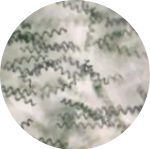
Tubular Photobioreactor holding 20 liters of spirulina algae
Airlift system likely attached to the bottom of the photobioreactor to agitate the spirulina, which is needed for efficient prevention of self-shading algal cultures. Uses food safe aquarium pump (protoype) with food grade materials. HEPA filter to prevent contaminated air from going in.
Heat mat underneath the entire PBR to maintain a temperature of 95 degrees farenheight.
Co2 and PH sensors continuously monitor the spirulina culture for a PH of 9.5-10: Co2 is bubbled into the PBR via the air pump if it or the PH sensor sees the PH rising. Spirulina likes alkaline environments, but if too alkaline sensor increase co2.
Optical density probe measure turbidity that can be fed through our App to alert users when to harvest.
Borosilicate glass, glass, polycarbonate for the exterior of the bioreactor.
Waterproof UVC light at the top of the PBR to sterilize remaining biofilms after harvest.
Ultrasonic vibration to clear biofilms during growing (optional)
Red+Blue led for growth of spirulina is also needed. This will be sealed via silicone and waterproofed. The light will be behind the glass to prevent contact with water and will also act as a sleeve for the PBR.
Here is a failed crowdfunding campaign I found similar to our aesthic and lighting choice. Our probes will be located at the top lid to measure PH and turbidity.

Unlike the PBR above, I also plan to make reflecting materials between the LEDs to maximize light distribution and efficiency.
Our nutrient tablet will be based off of BG-11 or Zarrouks media and will be dissolving and food safe. Either one time use or fed to the algae every day or by another increment yet unknown until further testing is done for this project.
Growth curve initial experiments with our nutrient tablet will also be necessary to track the most efficient times to add nutrients.
Arduino code for controlling pumps and lights via app. We hope to code so that when it is time for a periodic cleaning cycle, the pumps can flow at an aggressive pace to further clean the bioreactor. We also plan to use AI to monitor these sensors.
The PBR containing the algae will be separate from the lights. This is because when harvesting the algae, the main core can be pulled out and the top can be unscrewed to pour out the algae through a filter cloth we provide.
Project Backers
- 0Backers
- 0%Funded
- $0Total Donations
- $0Average Donation