About This Project
We can't predict eruptions but we can forecast probabilities with enough information. South Sister volcano in Oregon is ranked the 7th highest threat volcano in the US and has been showing signs of magma accumulating ~4 miles below its surface. Yet very little is known about the volcano and the causes of its past eruptions. Therefore, we propose to study the sequence of events leading to South Sister’s past eruptions to help forecast the nature of possible future eruptions.
Ask the Scientists
Join The DiscussionWhat is the context of this research?
Over the last 10 to 15 years there’s been a revolution in volcano science. We have learned a great deal about the processes driving volcanic eruptions, including that eruption characteristics such as explosivity and size are statistically related to which magmatic process initiated the eruption. This has led to the insight that by mapping the sequences of processes leading to past eruptions at a given volcano, we can estimate the probability of a given process occurring in the future and what type of eruption it is most likely to produce.
What is the significance of this project?
The US Geological Survey has given South Sister volcano its highest threat ranking and listed it as the 7th highest threat volcano in the US. The volcano has also shown signs of unrest through ground surface uplift and small earthquakes in recent years, which are thought to be caused by an accumulation of magma ~4 miles below the volcano. Simultaneously, South Sister is one of the most poorly understood volcanoes in the western US. While the volcano remains mostly quiet today, understanding the processes that led to its past eruptions is critical to interpreting its current behavior and forecasting its future behavior should the volcano show increasing unrest in the future.
What are the goals of the project?
Erupted lavas and tephras are a combination of quenched liquid magma and crystals that grew as the magma traveled to the surface. We gain insight into a magma’s history from the chemistry of the sample as a whole, as well as zones within individual crystals, which record the temperature, pressure etc. of the magma at different points in time, allowing us to reconstruct a magma’s history. Thus, our goals are to:
1. Collect ~20 lava samples from past eruptions at South Sister
2. Analyze the chemical composition of whole lava samples using X-ray fluorescence & inductively coupled plasma mass spectrometry (ICPMS)
3. Analyze the chemical compositions of individual crystal zones in the lavas using an electron microprobe
4. Map the sequences of processes that produced a given eruption
5. Repeat for as many eruptions as we can afford
6. Calculate probabilistic event trees (if we study 3+ eruptions) following methods in this paper
7. Share our results.
Budget
Due to changes in federal funding for science in the US, we find ourselves without the means to continue our research, which is why we need your help. Experiment.com is an all-or-nothing platform, so we're creating small stackable budget goals. We need a minimum of $4159 to study the events leading to one past eruption (see budget breakdown to the right).
The significance of our work is greatly improved with each additional eruption we study, as it allows us to better calculate the probability of a given process leading to an eruption. Therefore if we reach our initial goal, our next goals are:
$6100 = field work + studying 2 eruptions + fees
$8040 = field work + studying 3 eruptions + fees
$9981 = field work + studying 4 eruptions + fees
Any funds beyond our goals will be put towards publishing in a peer-reviewed journal
A list of our thank you gifts for our project backers can be found here. If we reach our $9981 goal, we'll set off a trashcano eruption for our backers!
Endorsed by
 Project Timeline
We are ready to begin this project as soon as we obtain funding. The project milestones will be reinforced by PhD program requirements for the students involved. All research unless otherwise specified will be conducted using facilities already available at Arizona State University.
Aug 10, 2025
Field work to collect samples at South Sister volcano
Aug 13, 2025
Project Launched
Sep 15, 2025
Send samples for external whole rock geochemical analyses & microscope slide preparation
Nov 15, 2025
Receive microscope slides, begin in-situ crystal analyses at ASU
Jan 15, 2026
In-situ crystal analyses continue + progress report
Meet the Team
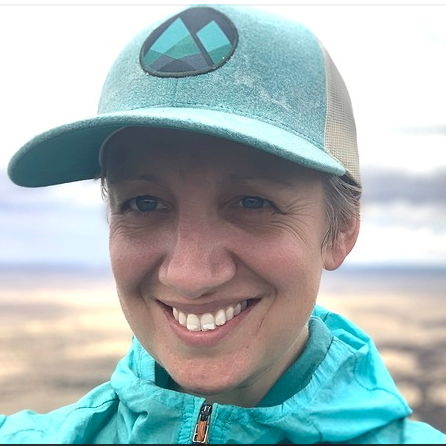
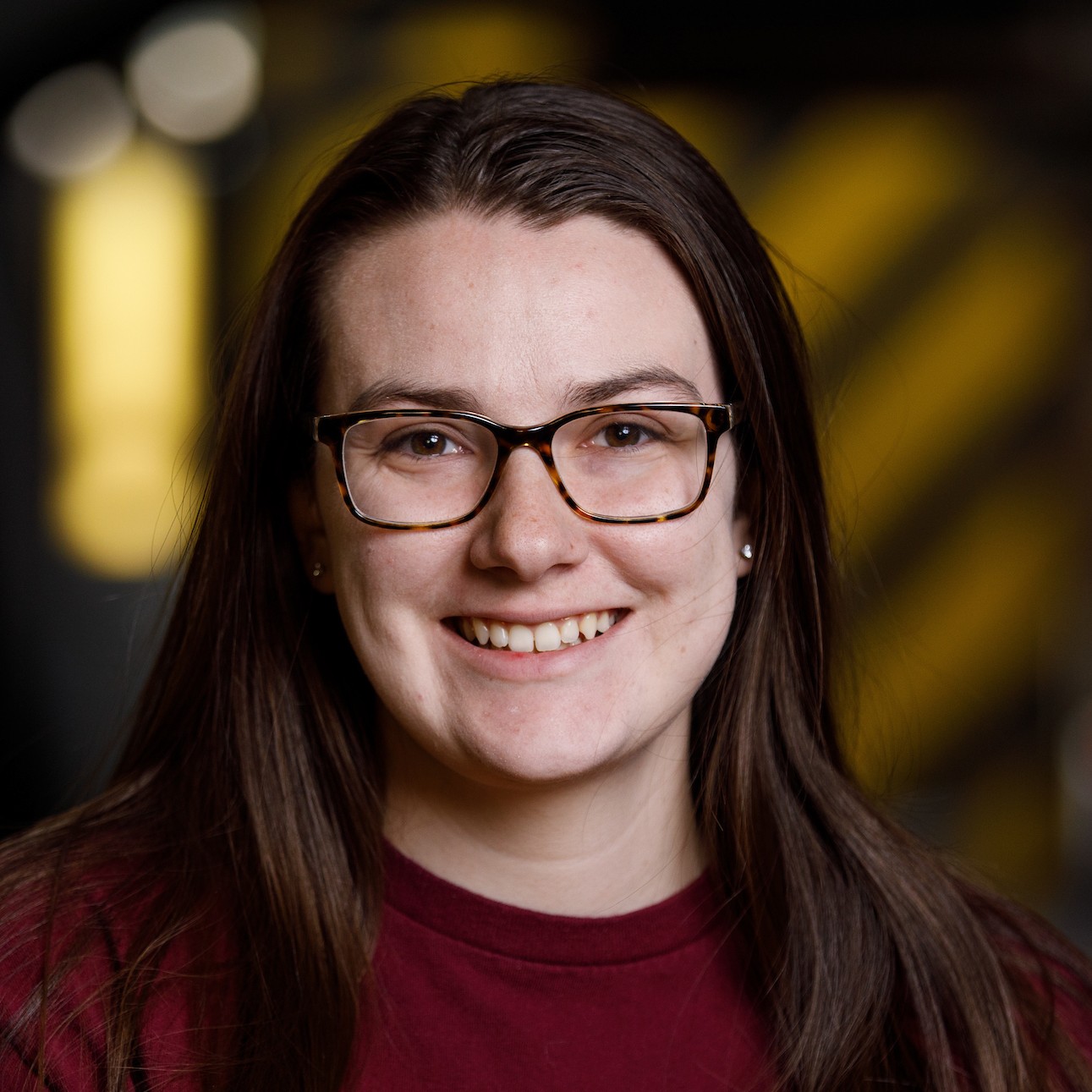
We study all things magma in the Experimental Petrology & Igneous processes Center at Arizona State University, also known as the EPIC lab. Our lab is committed to supporting underrepresented students in science. Your contributions will provide the much needed funds to continue this work and support their education even as it is defunded at the federal level.
Christy Till
I am a geologist who studies all things magma: how it is made, what causes to erupt, and how it forms the crust of rocky of exoplanets. I do this through a combination of field work, laboratory analyses, and high pressure and temperature experiments to reverse engineer magma in the lab. My fascination with geology started on family camping trips to the southwest and am fortunate enough to have an aunt who is also a geologist to show me it was also a career path. My path has been full of its fair share of failures, bumps in the road, and amazing mentors who motivated me to continue, in addition to the successes along the way. Today as a professor, I am passionate about using new and creative ways to understand magmatic behavior and opening doors to geology for others.
Julia Clarke
Julia studies the generation, evolution, and storage of arc magmas. Her current research project combines experiments, field work, and thermodynamic tools to determine the pre-eruptive magma storage conditions at South Sister. Julia earned her BS in Earth, Atmospheric, and Planetary Sciences and Chemistry from MIT in 2021, where her research focused on Paleozoic and Mesozoic paleoclimate. Outside of the lab, Julia loves bouldering, caving, camping, and playing board and card games.
Additional Information
You can find out more about our lab & research at https://expet.weebly.com/
Project Backers
- 16Backers
- 198%Funded
- $8,244Total Donations
- $515.25Average Donation