About This Project
This project focuses on transforming invasive water hyacinth from Lake Victoria into clean biogas for cooking through anaerobic digestion. By converting this harmful aquatic weed into a renewable energy source, the initiative addresses environmental degradation, improves lake navigation, and provides affordable, sustainable fuel for local communities, contributing to both ecological restoration and energy access.
Ask the Scientists
Join The DiscussionWhat is the context of this research?
This project addresses two major challenges around Lake Victoria, Kenya: the spread of invasive water hyacinth and limited access to clean energy. The fast-growing plant clogs waterways, disrupts fishing, harms biodiversity, and affects local livelihoods. At the same time, many households rely on expensive and polluting fuels like charcoal and kerosene. Our team offers a sustainable solution by harvesting the hyacinth and converting it into biogas and organic fertilizer through anaerobic digestion. This provides clean, affordable energy and supports local agriculture, while creating green jobs and restoring the lake’s ecosystem. The project promotes circular economy practices, reduces carbon emissions, and benefits low-income communities. With this approach, we turn an environmental threat into an economic opportunity and a source of renewable energy, helping to build climate resilience and support sustainable development across the region.
What is the significance of this project?
This project is significant because it transforms a harmful environmental problem into a sustainable solution. Water hyacinth has severely impacted Lake Victoria, disrupting livelihoods, harming biodiversity, and blocking water transport. At the same time, many surrounding communities face energy poverty, relying on costly and polluting fuels. By converting water hyacinth into clean biogas and organic fertilizer, the project provides renewable energy, restores the lake’s ecosystem, and creates jobs. It supports climate action, improves public health, boosts agricultural productivity, and empowers low-income communities. This model promotes circular economy principles and can be replicated across other regions facing similar challenges, making it a scalable and impactful solution for both environmental restoration and energy access.
What are the goals of the project?
We will remove 30–50 tons of water hyacinth daily from Lake Victoria using manual tools and a motorized harvester. The biomass will be chopped and mixed with cow dung in a 1:1 ratio, then fed into a 300m³ anaerobic digester. In this oxygen-free environment, microbes break down the material to produce methane-rich biogas. We expect 15–25m³ of gas daily. Biogas will be stored in floating tanks and distributed in 6kg portable bags to 25 pilot households. We will test biogas burn time, methane content, and cooking performance, and compare it to charcoal and solar alternatives to assess cost, emissions, and efficiency.
Budget
1. For Installation instillation of biogas digester– $20,000:
Purchase and install a 300m³ anaerobic digester with full biogas system.
2. Water hyacinth Harvesting – $8000:
Motorized boat for water hyacinth harvesting, fuel, harvesting tools, labor, & transport of hyacinth.
3. For Site Construction – $6500:
Foundation, housing for digester, gas piping, and material storage area.
4. Payment of raw materials & logistics cost - $2050: Raw materials collection & transportation
5. To facilitate Labor & Training – $2500:
technical training for safe system operation.
6. To facilitate Monitoring & Testing in government lab – $1000:
Gas meters, pH and temperature kits, and field data collection tools.
7. For Community Outreach – $1500:
Workshops, awareness events, printed materials, and demo sessions.
8. For acquisition of Permits & Contingency – $500:
Environmental licenses, communication, admin, & emergency buffer.
9. Miscellaneous - $500: unforseen circumstances like price increase
Endorsed by

 Project Timeline
The project’s success depends on timely setup of the digester, consistent harvesting of water hyacinth, and stable biogas production. Outcomes like gas yield and cooking performance carry experimental uncertainty and will be closely monitored. Key challenges include microbial balance and effective community distribution. Results will be shared with backers through videos,photos, usage data, and a final report highlighting environmental and social impact.
Jul 08, 2025
Project Launched
Aug 28, 2025
Project setup, permits, and procurement of equipment.
Sep 27, 2025
Begin water hyacinth harvesting and site preparation.
Oct 27, 2025
Install and test anaerobic digester system.
Nov 28, 2025
Start biogas and organic fertilizer production.
Meet the Team

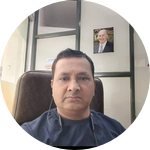
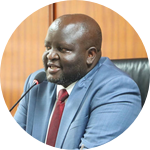
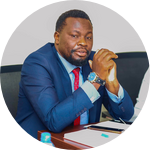

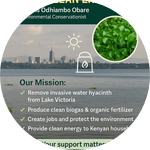
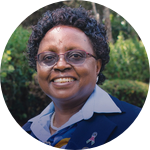
Our team is led by Collins Odhiambo Obare, an environmentally conscious entrepreneur with a strong commitment to sustainable development and clean energy. Backed by local engineers, community mobilizers, and youth leaders, the team brings expertise in biogas systems, environmental conservation, and community engagement. Together, we combine technical skill and grassroots knowledge to drive impact through renewable energy and ecosystem restoration.
Collins Odhiambo Obare
I’m an environmentally conscious entrepreneur passionate about turning local environmental challenges into sustainable solutions. As Founder of Hyacinth BioEnergy Ltd., I lead efforts to convert invasive water hyacinth from Lake Victoria into clean biogas and organic fertilizer. My work empowers communities, creates green jobs, restores ecosystems, and promotes a circular economy that benefits both people and the planet.
Peter Victor Owino
My name is Peter Victor Owino, and I’m an Environmental Biotechnologist and Microbiologist with over 20 years of experience in applied microbiology, environmental biotechnology, and sustainable waste management solutions. I graduated from Moi University, and ever since, I’ve dedicated my career to exploring how microorganisms can be used to restore our environment, control pollution, and drive bio-based innovations.
Over the years, I’ve had the privilege of leading and contributing to numerous projects in areas such as wastewater treatment, bioremediation, biogas production, and microbial applications for eco-friendly technologies. My work bridges both research and real-world implementation, combining academic knowledge with practical field expertise.
I’m passionate about using science to solve some of Africa’s most pressing environmental challenges. My goal has always been to develop solutions that not only work technically but also create positive, lasting impact in communities.
David Wright
Mr. David Wright
Biogas Engineer | Anaerobic Digestion Specialist
Alumnus, University of Nairobi
I am a seasoned Biogas Engineer and Anaerobic Digestion Specialist with over 25 years of experience in renewable energy systems and sustainable waste management. A proud alumnus of the University of Nairobi, I have spent my career designing, building, and optimizing biogas solutions that transform organic waste into clean, reliable energy.
My expertise spans a wide range of feedstocks, including agricultural residues, municipal solid waste, and invasive aquatic plants like water hyacinth. I have successfully led numerous projects from feasibility studies to commissioning, delivering biogas systems that improve energy access, reduce environmental pollution, and support circular economies.
Driven by a passion for sustainable development, I work closely with governments, NGOs, academic institutions, and private sector partners to implement innovative waste-to-energy solutions across Africa and beyond. My mission is to make biogas a practical, accessible, and impactful energy source for communities .
Arron Green
My name is Arron Green, and I’m an Environmental Compliance Specialist with a strong academic foundation from the University of Nairobi. My work is driven by a deep commitment to sustainability, regulatory integrity, and responsible environmental stewardship.
Over the years, I’ve developed expertise in monitoring environmental regulations, conducting compliance audits, and ensuring that industrial and community projects align with both local and international environmental standards. My goal is to help organizations operate efficiently while minimizing their ecological footprint.
Whether it's preparing Environmental Impact Assessment (EIA) reports, advising on waste management protocols, or guiding institutions through environmental certification processes, I bring a solutions-oriented approach rooted in both science and policy.
I’m passionate about creating a future where development and environmental protection go hand in hand—and I’m proud to be part of that change.
Janet Kasiki
Janet Kasiki
Project Manager / Operations Manager
15 Years of Experience | Jomo Kenyatta University Graduate
I’m Janet Kasiki, a dedicated Project and Operations Manager with over 15 years of experience successfully leading cross-functional teams, managing complex projects, and improving operational efficiency across various sectors. I hold a degree from Jomo Kenyatta University, where I built a strong foundation in project execution, organizational leadership, and operational excellence.
Throughout my career, I’ve overseen daily plant operations, implemented systems for performance tracking, enforced health and safety compliance, and managed budgets, procurement, and risk. I specialize in delivering projects on time, within budget, and aligned with strategic goals. My approach blends analytical thinking with hands-on leadership, allowing me to solve problems, motivate teams, and ensure smooth project delivery.
I’m particularly skilled in streamlining workflows, fostering accountability, and cultivating high-performing teams. My leadership style is collaborative and results-driven, with a strong focus on continuous improvement and stakeholder satisfaction.
Key Competencies:
Project Planning & Execution
Operations Oversight
Budgeting & Cost Management
Staff Supervision & Team Building
Risk Management & Compliances
Performance Monitoring & KPI
HSE Enforcements
Cross-Department Coordination
I’m passionate about driving operational success and delivering value in every project. I now seek to contribute my skills to forward-thinking organizations focused on growth, efficiency, and sustainable impact.
Additional Information
This project is community-centered and climate-smart. It aligns with Kenya’s Vision 2030 and global Sustainable Development Goals (SDGs), especially SDG 7 (Affordable and Clean Energy), SDG 13 (Climate Action), and SDG 8 (Decent Work and Economic Growth). The raw material, water hyacinth, is abundant and freely available, reducing input costs. The pilot is designed to be low-cost and replicable, with potential to scale across other affected regions around Lake Victoria and across Africa. Partnerships with local youth groups, farmers, and women’s cooperatives are part of the implementation strategy to ensure local ownership, capacity building, and social inclusion. The project also opens pathways to future carbon credit generation and integration into clean cooking and waste-to-energy programs.
Project Backers
- 3Backers
- 1%Funded
- $150Total Donations
- $50.00Average Donation