About This Project
The Ridgeline Project, led by The Wild Cat Imaging Project and Las Oncas, studies six threatened wild cat species in Costa Rica’s Talamanca Mountains. Using remote ridgeline camera traps and engaging local communities, we aim to determine how cats use high-elevation corridors, hypothesizing greater activity along ridgelines due to easier navigation and higher prey availability.
Ask the Scientists
Join The DiscussionWhat is the context of this research?
In Costa Rica’s Talamanca Mountains, camera-trap surveys routinely record pumas and ocelots, whereas oncilla, margay, jaguar, and jaguarundi remain elusive. The Central American clouded oncilla (Leopardus pardinoides oncilla) is among the rarest and most endangered Neotropical felids, confined to montane cloud forests and poorly understood ecologically(Ramírez-Fernández et al., 2024). Studies from other regions suggest that small felids often segregate in space or time to avoid competition (Di Bitetti et al., 2010; Nagy-Reis et al., 2019), but such dynamics remain undocumented in Central American cloud forests. We hypothesize that wild cats—particularly larger felids—concentrate activity along high-elevation ridgelines, where easier navigation and prey abundance may facilitate movement, whereas the smaller felids will have lower presence, avoiding competition from the larger species.
What is the significance of this project?
This project is significant because it fills a critical gap in our knowledge of Neotropical small cats in high-elevation ecosystems. While pumas and ocelots are commonly documented, the oncilla, margay, jaguar and jaguarundi remain largely unstudied in Costa Rica’s cloud forests. These species are threatened by habitat loss, competition, and climate change, yet almost nothing is known about how they use montane ridgelines or coexist with larger predators. By generating high-resolution video data, this project will provide the first detailed observations of their habitat use and behavior at high elevations. The findings will establish a much-needed baseline for future research and conservation planning, while also producing compelling visual evidence that can engage the public and strengthen efforts to protect one of Mesoamerica’s most biodiverse and vulnerable ecosystems. This project will be the highest elevation wild cat study in Central America.
What are the goals of the project?
The goals of The Ridgeline Project are to document the occurrence of oncilla, margay, jaguar, jaguarundi, puma, and ocelot in high-elevation ridgeline habitats of Costa Rica’s Talamanca Mountains, complementing existing data on puma and ocelot. We aim to characterize how felids utilize montane ridgelines and assess patterns of habitat segregation among species, while using high-resolution video camera traps to record elusive behaviors, activity patterns, and interactions not detectable with standard trail cameras. By establishing foundational data on wild cat ecology in Central American cloud forests, we seek to anticipate how climate change may affect their persistence and produce scientific outputs and compelling visual material that raise awareness and inform conservation strategies for these threatened felids and their fragile habitats.
Budget
Each budget item directly supports the objectives of The Ridgeline Project, which will deploy 20 camera traps along four ridgelines in the Talamanca Mountains to monitor Costa Rica’s wild cats and their prey. The 22 Browning Strike Force HP5 cameras will ensure full coverage of all study sites and allow for replacements in case of equipment failure. The Duracell AA batteries will power the cameras for the duration of each deployment, enabling continuous data collection in these remote high-altitude environments. Educational materials, posters, and booklets will be used to share results with local communities, schools, and park authorities, promoting conservation awareness and participation. Field logistics cover the essential costs of reaching and maintaining high-elevation camera stations, including lodging, food, and transport. Finally, salaries for local guides ensure fair compensation, community involvement, and safe navigation through the challenging terrain.
Endorsed by

 Project Timeline
In Feb 2026 we will install camera traps along four high-elevation ridgelines in the Talamanca Mountains. They will run through June 2026, when we return to collect data and begin analyses. The cycle repeats in Feb 2027 to capture seasonal variation. Backers will receive field updates, wildlife footage, and summaries of findings, with a final report highlighting results and conservation significance.
Nov 11, 2025
Project Launched
Feb 20, 2026
Make trails on 4 key ridge-lines within the study area
Feb 21, 2026
Install 20 Browning Trail Cameras, 5 on each ridge-line
Apr 15, 2026
Community workshops
Jun 15, 2026
Data collection and maintenance
Meet the Team
Affiliates
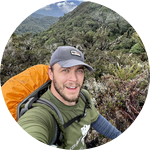
Benjamin Luke
I have been working around the clock since 2019, to document and protect wild felids in Latin America. This lead to me starting The Wild Cat Imaging Project. With a focus on the Clouded Oncilla (Leopardus pardinoides).
The creation of The Ridgeline Project, was an idea I have been planning over the last 3 years. The untouched ridge-lines drew me in, wondering what could be uncovered in Chirripó National Park.
Publications;
Custom designed camera traps; lessons learned from a case study in Costa Rica
Jaguars scavenging on bottlenose dolphin
CV: https://drive.google.com/file/...
Lab Notes
Nothing posted yet.
Additional Information
Project Backers
- 0Backers
- 0%Funded
- $0Total Donations
- $0Average Donation