About This Project
Atmospheric methane, contributing to 30% of global warming, remains challenging to mitigate due to its low concentration. We propose developing enhanced soluble methane monooxygenase variants optimized for atmospheric methane conversion through AI protein optimization. By combining AI modeling with high-throughput screening, we aim to achieve a 100-fold increase in methanol production efficiency at atmospheric methane levels, enabling economically viable capture from dilute sources.
Ask the Scientists
Join The DiscussionMotivating Factor
Methane (CH₄) accounts for 30% of current global warming[1], yet 75% of emissions occur at concentrations too dilute (<1,000 ppm) for cost-effective mitigation[2]. Deployment of methane monooxygenases (MMO) in either bioreactors or in engineered crops could oxidize CH₄, but existing MMO lack the catalytic efficiency for practical deployment: expression of mmoXYBZDC[3] achieves methane conversion, but only at high methane concentrations. Therefore, improving MMO through protein engineering is critical for large-scale CH₄ oxidation. Traditional protein engineering relies on methods that sample a fraction of sequence space, making optimization difficult. Our AI platform screens >10⁷ variants in silico per cycle, consistently achieving 100-500× activity gains while maintaining protein stability. This approach could reduce reactor costs for oxidizing 500 ppm CH₄ to economically viable levels ($100/t CO₂e target[4]) in just 6 cycles, versus years of traditional evolution.
Specific Bottleneck
Soluble MMO (sMMO) fail due to both low expression/activity. The heterologously expressed mmoXYBZDC [3] is optimized for industrial CH₄ removal (550,000 ppm) and requires multiple improvements:
Unsuitability for trace CH₄: At 550,000 ppm, CH₄ saturates the enzyme, masking its poor activity at 500 ppm. For dilute CH₄, activity must increase by ≥100× to achieve economic viability.
Tradeoffs in evolution: Lowering kₘ to <10 nM (required for 500 ppm[4]) risks destabilizing the enzyme or reducing Vₘₐₓ. Conventional mutagenesis cannot test enough variants to resolve this tradeoff.
Lack of low-CH₄ data: mmoXYBZDC's kinetics (kₘ, Vₘₐₓ) at <1,000 ppm CH₄ are uncharacterized. This data gap critically hampers rational engineering efforts and prevents accurate technoeconomic assessment of mmoXYBZDC for climate applications.
Poor heterologous expression: mmoXYBZDC requires stabilization, and may not be suitable for long term expression in either E. coli or other potential hosts.
Actionable Goals
We will deploy our EVOLVEproV2 AI model—a protein evolution platform that simultaneously optimizes multiple properties through multi-objective learning across diverse experimental data. By screening >10⁷ variants in silico per cycle, EVOLVEproV2 achieves 100–500× gains across multiple features concurrently. Goals include:
100× higher specific affinity: Use EVOLVEproV2 to co-evolve mmoXYBZDC's a˚S ≥100 μM⁻¹s⁻¹ (vs. ~1 μM⁻¹s⁻¹ in wild-type sMMO [16]) via optimization of kₘ (<10 nM) and Vₘₐₓ (>1 μmol/min/mg). This enables economically viable oxidation of 500 ppm CH₄ at ≤$100/t CO₂e [4].
Enhanced stability: Leverage EVOLVEpro to maintain robust mmoXYBZDC and GroESL scaffold stability [3] while improving catalytic efficiency.
Precise substrate specificity: Engineer ≥95% reduction in unwanted methanol oxidation.
Our multi-objective AI approach will accomplish these interlinked goals in 6 cycles versus years of traditional evolution.
Budget
These funds will support the research as described in the proposal for meeting the project aims.
Meet the Team
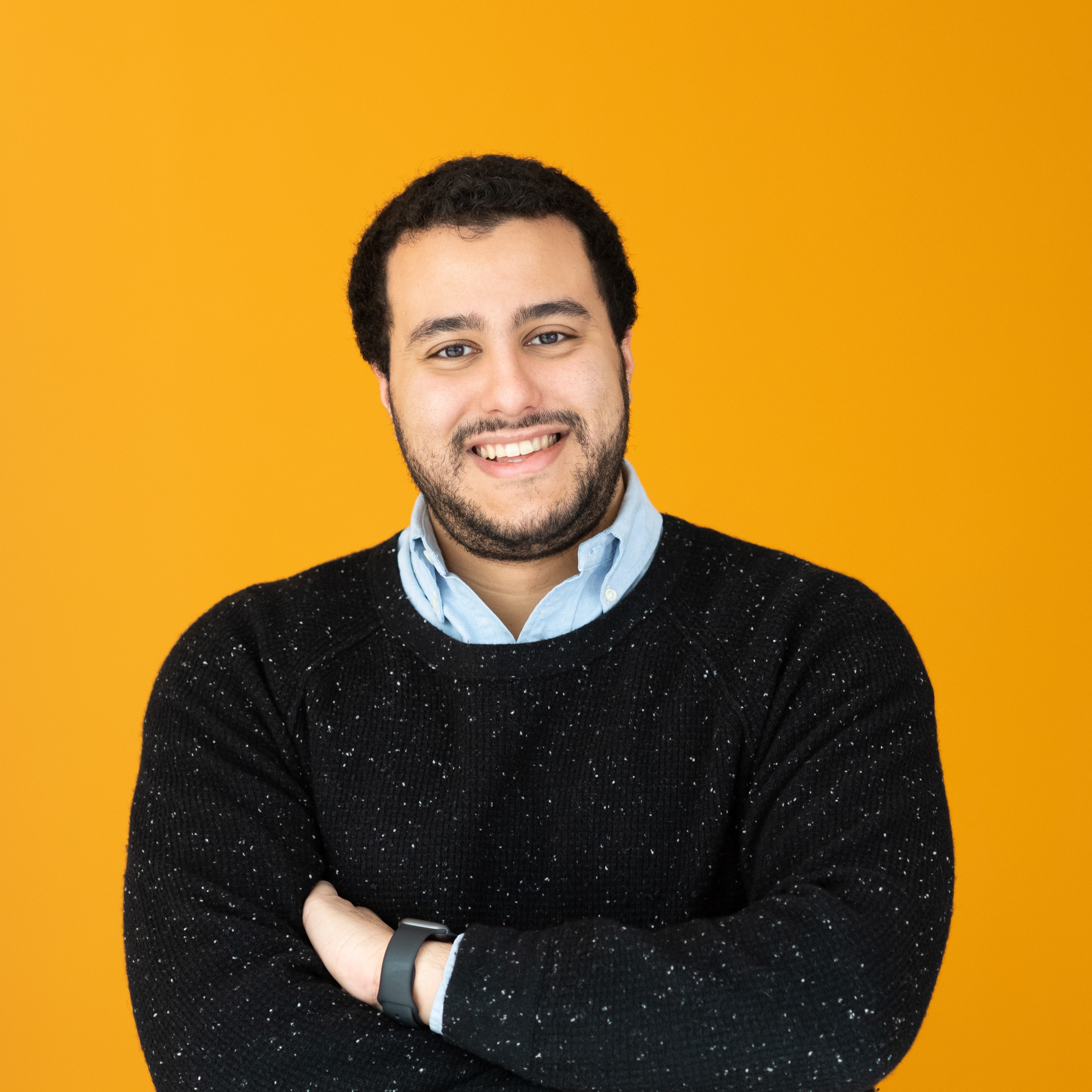
This project is led by Drs. Omar Abudayyeh and Jonathan Gootenberg, co-directors of the Abudayyeh-Gootenberg lab at Harvard Medical School. Their lab specializes in protein engineering and artificial intelligence approaches for biological applications, with over 50 publications and 35,000 citations. The team brings unique expertise in machine learning-driven protein evolution and high-throughput engineering, as demonstrated by their development of the EVOLVEpro platform for directed evolution.
Omar Abudayyeh
Omar Abudayyeh is an Assistant Professor at Harvard Medical School, Investigator at Brigham and Women’s Hospital and Mass General Brigham’s Gene and Cell Therapy Institute, Associate Member of the Broad Institute, and faculty member with the Department of Stem Cell and Regenerative Biology at Harvard University. He directs the Abudayyeh-Gootenberg lab, which is developing next-generation gene editing, gene delivery, and synthetic biology technologies using protein engineering and artificial intelligence and applies them towards new therapeutics and the study of aging. He previously was a McGovern Fellow at MIT where he directed his own research group and before that was at Harvard Medical School and MIT as a graduate student in Feng Zhang’s lab at the Broad Institute, where he earned a Ph.D. researching novel CRISPR enzymes for genome editing, therapeutics, and diagnostics. He is a pioneer in the gene editing and AI bio fields as an inventor on dozens of patents and patent applications relating to gene editing, therapeutic, and diagnostic innovations, as well as over 35,000 citations on more than 50 peer-reviewed articles in journals like Nature, Science, and Cell. He is also co-founder of Sherlock Biosciences (acquired), Proof Diagnostics (acquired), and Tome Biosciences, which are commercializing CRISPR-based diagnostics and therapeutics, as well as other stealth starts ups in the gene and RNA therapy space, which have collectively raised hundreds of millions. Dr. Abudayyeh has been recognized as Technology Review Innovators Under 35, Bloomberg New Economy Catalyst, Endpoints 20 under 40 Next Generation of Biotech Leaders, 2022 Termeer Scholar, 2018 Forbes 30 under 30, Business Insider 30 under 30, and a 2013 Paul and Daisy Soros Fellow. Dr. Abudayyeh graduated from MIT in 2012 with a B.S. in mech eng and bioengineering, where he was a Henry Ford II Scholar and a Barry M. Goldwater Scholar. He also spent two years studying towards an MD at Harvard Medical School.
Project Backers
- 0Backers
- 0%Funded
- $0Total Donations
- $0Average Donation