About This Project
Mizu-Wai Memories explores how hands-on lauhala weaving and oral story exchanges can strengthen intergenerational connections and equitable stewardship of East Maui’s waterways. Through community gatherings, participants weave small symbolic forms while sharing memories and hopes for the future of wai, water. A culminating interactive work shares the conversations with broader audiences while highlighting different ways of knowing as part of environmental story data mapping.
Ask the Scientists
Join The DiscussionWhat is the context of this research?
In July 2025, Alexander & Baldwin relinquished control of the largest private water system in Maui to Mahi Pono, creating a critical moment for more equitable, community-led water stewardship. The newly formed ʻAha Wai o Maui Hikina Community Board offers a path for greater public voice in shaping the future of East Maui water. This project aims to supplement community discussions around this often contentious topic. Mizu-Wai Memories responds with lauhala weaving workshops to bringing people together in a safe space to share stories, reflect on history, and envision a just water future as control shifts from private hands to public good.
In the late 1800's water rerouting by sugar cane irrigation ditch systems began diverting millions of gallons daily, disrupting native ecosystems, water flows, and Kanaka Maoli agricultural lifeways. In this new era of community informed stewardship, a public informed of the past can better envision the future.
What is the significance of this project?
There is urgency in this moment as water moves from private hands to more public ones. Elders with living memories of plantation life under the East Maui Irrigation system are passing, risking the loss of first-hand accounts of a pivotal era in Maui’s history. At the same time, many current Maui residents have no generational relationship to these water histories, creating a gap in shared understanding. This project bridges that gap by inviting intergenerational and intercultural dialogue through the tactile, symbolic act of weaving with hala—a plant impacted by water diversion. By pairing moʻolelo of the past with collective envisioning of the future, Mizu-Wai Memories fosters community reflection on the transition of water management from private control toward a more public centered stewardship, ensuring that the voices, values, and lived experiences of East Maui communities shape the path forward.
What are the goals of the project?
Mizu-Wai Memories seeks to preserve, share, and activate community knowledge of East Maui’s water systems during a critical shift from private to public stewardship. The project gathers intergenerational stories from kūpuna and cultural practitioners about pre-plantation and plantation-era water stewardship, as well as visions for future stewardship. Lauhala weaving workshops invite participants to engage in dialogue on water history, ecology, and values, seeded with kūpuna storyweavings that highlight traditional indicators of water health such as the presence of ʻōpae and ʻoʻopu. Pre- and post-workshop assessments measure changes in participants’ water knowledge and cultural appreciation. Increased civic engagement will be assessed in collaboration with local groups. Weavings will be paired with augmented reality features to amplify stories in a traveling installation engaging a broader public in the care and history of our water systems.
Budget
This budget is seed funding for this project. It supports inter-island travel for workshops. It honors the workshop participants and the advisory board with stipends. It supports workshop instruction, material prep, snacks, and the creation of culminating online resources. Some funds support the AR development, installation display and the data documentation.
The East Maui Water Authority will support the project with:
coordination, promotion, participant recruitment, final panel discussion support, resources/archive material access, and advisory review of the workshop materials and the final report ( in-kind value= $12K). The Hāna Hub facility, managed by The Hāna Business Council, will host workshops, support participant recruitment, review workshop materials, provide workshop meals, and instructor visitor accommodations. (in-kind value=$3K)
I am also applying for a Creative Capital Award to fully fund documentation and the creation of the collaborative art installation.
Endorsed by

 Project Timeline
Time is allocated for the care of hala trees, the collection, and the prep of leaves. Since the workshops will be in coordination with the East Maui Water Authority, Aha Wai O Maui Hikina (the East Maui Regional Community Board), and the Hāna Hub (managed by the Hāna Business Council) to complement existing programs, weaving gatherings will span a wide period of time from December 2025 to April 2026. A showcase of the final art is in fall 2026.
Aug 31, 2025
Travel to Maui for initial meeting with collaborating organizations and hala site visits.
Sep 12, 2025
Project Launched
Nov 19, 2025
Kōkua, care for hala tress & collect hala leaves
Dec 09, 2025
Develop materials for community workshops
Jan 14, 2026
Research existing story archives
Meet the Team
Affiliates
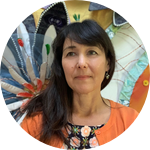
Corinne Okada Takara
Corinne Okada Takara is a community art activist and STEAM educator who creates programs that elevate and empower community voices in conversations centered on identity, place, science, and technology. She is a Yonsei (4th generation) kama'aina settler who lives on O'ahu. For over twenty years her passion for accessible STEAM learning anchored in cultural and community science knowledge has driven her to collaboratively develop programs with museums, libraries, and community organizations. She is a co-founder of BioJam Camp, a teen program anchored in both Salinas and the Stanford Department of Bioengineering, served as the Program Director of the community biolab Xinampa in Salinas, California, and is co-founder of the youth Art & Design Thinking Camp in East San José, California. Her frugal science tool and biomaterial design research is conducted in her garage and in her Nest Makerspace shed.
Takara has received State, National, and International recognition for her work straddling art and biology including fellowships and residencies such as the Ginkgo Bioworks Creative Residency, a Lucas Artist Residency at Montalvo Arts Center, 2020 Global Community Biosummit Fellowship, and a 2020 National Public Interest Technology Innovation Fellowship. She has led four high school teams in the International Biodesign Challenge for which she was honored with the 2019 Outstanding Instructor Award. She is a recipient of the inaugural 2023 Ka Maka ʻĪnana Think Tank Grant from Purple Mai’a.
Takara holds a BA in Design from Stanford University and is an alumni of the Hawai’i Purple Mai’a Ka Maka I’nana program. http://www.okadadesign.com/ & https://nestmakerspace.weebly....
Additional Information
As a kama'aina settler and descendant of immigrant laborers who helped build the East Maui Irrigation ditch system, I feel a responsibility to contribute to the re-envisioning of wai for public benefit and the health of ʻāina, rather than private, concentrated use. As an educator committed to place-based materials and recognizing ancestral knowledge as science knowledge, I aim to create spaces for community sharing, story mapping, and integration of existing knowledge and data—ensuring these resources inform and inspire future equitable water stewardship.
"Mizu" is a Japanese word for the water one drinks and "Wai" is the Hawaiian word for water. I wanted to bring them together in the title as we reflect on the era of disruptive water rerouting and the sustainable Hawaiian systems that preceeded.
COLLABORATORS: I want to highlight that I have the support of the East Maui Water Authority, the Aha Wai O Maui Hikina, East Maui Regional Community Board, and the Hāna Hub, all of whom will help identify the knowledge holders to inform the initial water 'ike, knowledge, mo'olelos shared in the workshops, as well host workshops spaces, panel discussion, and support the qualitative and quantitative data collected.
AR: I have been experimenting with Adobe Aero to create the augmented reality overlays, but that tool will be discontinued so I am now exploring an AR platform (ARPoise) which I have used in a previous community story sharing AR project (Hidden Histories) serving as the Supervising Artist. To see examples of my recent experimentation with augmented reality and story weaving, please visit these links: https://www.instagram.com/reel... https://www.instagram.com/reel... https://www.instagram.com/reel...
Project Backers
- 10Backers
- 50%Funded
- $3,450Total Donations
- $345.00Average Donation