About This Project
Methane oxidising bacteria are the sole biological sink for atmospheric CH4. Their oxidation rates are however too slow for practical CH4 removal. The overarching goal of the project is to develop synthetic methanotrophs for efficient atmospheric methane oxidation. We will mine new soluble methane monooxygenase from unique environments, increase their substrate affinity using directed evolution and express them in suitable methylotrophs.
Ask the Scientists
Join The DiscussionMotivating Factor
CH4 emissions have contributed ~30% of global warming to date [1]. Technologies for oxidizing atmospheric CH4 could substantially mitigate climate change. While CH4 above ~44,000 ppm can be flared, ~75% of CH4 pollution is atmospheric (2 ppm) , too dilute to be oxidized at scale using existing technologies [2].
Methane monooxygenase (MMO) enzymes, found in methanotrophic bacteria, naturally catalyze oxidation of CH4 to methanol in a one-step reaction at ambient conditions [3]. Oxidation of dilute CH4 at scale may be possible in engineered systems using methanotrophs, for example via flow-through reactors [4, 5]. Enhancing oxidation rate at low (2-1000 ppm) CH4 concentrations is necessary to achieve feasible cost and scalability for these applications. For example, estimates indicate efficiency improvements must enable up to 10-fold cost reduction for oxidation of 500 ppm CH4 to reach $100/t CO2e in a reactor [5].
Specific Bottleneck
Screening many natural variants or engineering MMO may provide a path to efficient CH4 oxidation. Of the two MMO families, soluble MMO (sMMO), a three-part enzymatic system, is a stronger candidate for engineering, since it faces fewer challenges to study, handling and heterologous expression compared to particulate MMO (pMMO) [3]. However, sMMO engineering thus far has focused on manufacturing applications with high CH4 concentrations [6-8]. sMMO activity should additionally be engineered using high-throughput methods [6, 7].
Specific affinity (a˚S), defined as Vmax/kM, is a metric for enzyme activity at very low substrate concentration that should be maximized [4]. Few sMMO variants have been characterized [9] and other natural or engineered variants might achieve lower kM and/or higher a˚S. In heterologous expression, suppressing non-specific oxidation of methanol to toxic formaldehyde will also be crucial [10], suggesting the need to express sMMO in suitable methylotrophs.
Actionable Goals
While design constraints for an application scenario are needed to establish clear performance targets for sMMO engineering, work should begin now to engineer sMMO. Goals are higher a˚S of the MMOH hydroxylase component of sMMO, as well as suppression of non-specific oxidation of methanol to toxic formaldehyde. A kM < 50 nM would be comparable to the lowest whole-cell kM value measured for a methanotroph [11]. This work should involve screening of natural sMMO variants from uncultured microbes derived from metagenomic sequence data, in addition to protein engineering.
Budget
The funding requested will cover the salary of a post-doctoral researcher for one year as well as the consumables required for the successful completion of the project.
Meet the Team
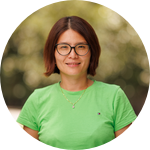
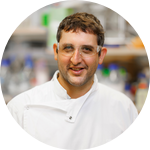
Dr Gumulya (UQ), an expert in protein engineering, will oversee the development of novel sMMO enzymes, collaborating with Prof Schenk (UQ) and A. Prof Haritos (Monash University). A. Prof Adame (Griffith University), an expert in microbial ecology, will direct the metagenomic mining for new sMMO enzymes, working alongside Prof Greening (Monash University). Prof Marcellin (UQ) will oversee the metabolic analysis of the synthetic methanotrophs.
Yosephine Gumulya
Dr Yosephine Gumulya is a Future Academic Leader in the School of Agriculture and Food Sustainability (AGFS) at the University of Queensland (UQ). She also leads a group at the UQ Biosustainability Hub in Australian Institute for Bioengineering and Nanotechnology. Her academic journey began after completing her PhD at the Max Planck Institute under Prof Reetz in protein engineering, Dr Gumulya joined UQ as a postdoctoral fellow where she developed novel tools for engineering highly thermostable and promiscuous enzymes. In 2016, she was awarded the prestigious Endeavour Scholarship to visit the lab of Prof Frances Arnold, a Noble Laureate in Chemistry, at Caltech in US. She then joined Commonwealth Scientific and Industrial Research Organisation (CSIRO) as Research Scientist, focusing on engineering microbes for metal leaching from low grade ores. In 2021, she moved to Queensland University of Technology as Senior Research Postdoctoral Research fellow, focusing on methane mitigation and gut microbiome engineering. In 2024, she returned to UQ as Future Academic leader. Her research focus on using synthetic and system biology approaches to engineer proteins, microbes and microbiomes. She has successfully secured $2.5 M in funding from National Health and Medical Research Council (NHMRC), CSIRO, the Food and Beverage Accelerator program, ARC Centre of Excellence, and multiple industry partners. She has published over 32 peer-reviewed journal articles and holds three patent applications in protein engineering. She has co-supervised more than six PhD candidates and supervised numerous master’s students. Dr Gumulya is a member of the Australian Society for Biochemistry and Molecular Biology and serves on the AGFS Early and Mid-Career Academics Committee. She frequently speaks at national and international conferences and symposiums, reflecting her role as an emerging academic leader in protein engineering.
Esteban Marcellin
Professor Esteban Marcellin is a leading researcher in microbial engineering, bioprocess optimization, and synthetic biology. His work focuses on advancing industrial biomanufacturing by developing high-performance microbial strains and scalable bioprocesses. As a professor at the University of Queensland (UQ), he plays a key role as founding Director of the UQ Biosustainability Hub, driving innovations that transition big emitters to net zero using renewable feedstocks.
Professor Marcellin has a strong track record of industry collaboration, particularly with Lanzatech, Calysta and Windfall Bio with whom he has worked since 2012, 2018 and 2024 contributing to the successful commercialization of gas fermentation technologies. His expertise in systems biology, automation, and gas fermentation has positioned him as a key figure in industrial biotechnology. His group, now exceeding 40 members, integrates synthetic biology and engineering to develop sustainable biomanufacturing solutions.
Professor Marcellin is deeply involved in translating research into impact. His leadership has been instrumental in securing major investments like the ARC Centre of Excellence in Synthetic Biology. His contributions extend beyond academia, fostering partnerships that drive innovation and sustainability in biomanufacturing, precision fermentation, and synthetic biology.
Project Backers
- 0Backers
- 0%Funded
- $0Total Donations
- $0Average Donation