About This Project
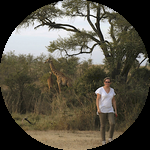
In western Uganda, hippos move between land and the Kazinga Channel, making them ideal sentinels of ecosystem health. By testing hippo dung and using environmental DNA, we can detect pollutants and pathogens moving through the watershed. Over 60,000 people depend on these waters for food, making this a critical One Health issue. We hypothesize that higher levels of pollutants and pathogens will be detected in hippos, soil and waters near areas of higher human activity.
Ask the Scientists
Join The DiscussionWhat is the context of this research?
In Uganda’s Queen Elizabeth Protected Area, the boundary between farmland and protected land is thin. Each night, hippos leave the Kazinga Channel to graze in nearby fields, returning to the water by morning. This movement connects people, crops, and wildlife, but it also carries unseen risks. Runoff from farms and settlements brings pesticides, plastics, and pathogens into the same waters where families collect drinking water and fish for food. Studies have shown that agrochemicals and plastic pollution are degrading ecosystems and biodiversity (Andersson & Isgren, 2021; Peña et al., 2023), while new tools like environmental DNA (eDNA) can reveal the hidden presence of contaminants and microbes long before damage becomes visible (Thomsen & Willerslev, 2015). Yet we still know little about how these pollutants move through shared waterways like the Kazinga Channel, or how they affect the wildlife and people who depend on them.
What is the significance of this project?
Pollution and pathogens moving through shared waterways threaten both wildlife and human health, yet we lack baseline data on how contaminants spread between land and water in biodiverse regions like Uganda’s Kazinga Channel. Hippos, which daily connect these environments, provide a unique opportunity to measure this transfer. By using environmental DNA (eDNA) to detect pollutants, viruses, and species presence, this project will deliver the first integrated dataset linking wildlife, water quality, and human risk in this critical watershed. These data are essential for conservation managers and health authorities to act early to protect community and wildlife health.
What are the goals of the project?
The goal of this project is to use hippos as bioindicators to understand how pollution and pathogens move through the Kazinga Channel, a 36 km waterway linking Lake Edward and Lake George in western Uganda. With funds raised, I’ll purchase a used RAV4 to access remote sampling sites safely during both wet and dry seasons. At each site, I’ll collect water and hippo dung samples to test for environmental DNA (eDNA), revealing viruses, mammals, fish, and birds, while ecotoxicology testing will identify pesticide and chemical residues. Samples will be processed with collaborators using standard protocols to ensure scientific rigor. This pilot will establish a biodiversity and pollution baseline to guide Uganda Wildlife Authority management and train local citizen scientists for future monitoring. We’ll sample eight sites in two seasons (wet (Apr–May) and dry (Jul–Aug), collecting approximately 64 water samples and at least 24 hippo fecal samples across both periods.
Budget
The most critical item needed is a reliable field vehicle. The Kazinga Channel stretches 36 km through remote terrain. A vehicle allows us to reach multiple sampling sites safely, transport equipment, and collect samples across seasons. Without it, the fieldwork simply can’t happen. With a few initial eDNA kits we can perform a pilot to detect viruses and identify mammals, birds, and fish in the watershed. Finally, with a small amount dedicated to laboratory analysis we can secure the data from eDNA samples and a small subset of pesticide and chemical testing of soil and water samples to pinpoint pollution sources that threaten both wildlife and human health. Finally, these funds will provide a critical start that will allow us to pursue larger funding opportunities.
Endorsed by
 Project Timeline
During the campaign, I’ll share footage from the Kazinga Channel. Once funded, we’ll purchase a field vehicle in early 2026 and begin full sampling in April. Backers will see updates from the field, the team, and early eDNA and pollution results. Final updates will highlight findings shared with the Uganda Wildlife Authority and next steps for training local citizen scientists.
Nov 18, 2025
Project Launched
Dec 15, 2025
Photos and video of travel to Queen Elizabeth National Park and UWA headquarters
Feb 09, 2026
We’ll share photos and short video clips of our preliminary sampling. Backers will see how eDNA is collected to uncover hidden biodiversity and pollution.
Mar 31, 2026
As samples are processed, backers will get a behind-the-scenes look in the lab. Deliverables include lab footage, stills of sample preparation and sequencing,
Jun 01, 2026
We’ll share how eDNA is analyzed, initial results showing what the eDNA and pollution tests reveal.
Meet the Team
Jennifer Verdolin
I am an animal behaviorist and conservation scientist passionate about understanding and protecting the complex relationships between people and wildlife. My research has taken me from studying the social lives of mountain gorillas in Uganda to leading community-based conservation projects in two Ugandan national parks. As a U.S. Fulbright Scholar, I worked to develop programs that connected science, culture, and conservation.
My current work on mountain gorillas continues but we are adding an incredibly important project in Queen Elizabeth National Park. This project focuses on how pollution affects ecosystems shared by humans and wildlife. We will also be utilizing emerging tools like environmental DNA (eDNA) to detect hidden threats to biodiversity and human health. Through my 501(c3) organization, Wild Connection, I am committed to integrating local communities into every stage of research, from training and empowering farmers, students, and rangers as citizen scientists to building lasting conservation capacity and solutions that work for both people and nature.
Lab Notes
Nothing posted yet.
Project Backers
- 5Backers
- 5%Funded
- $215Total Donations
- $43.00Average Donation