About This Project
Let's fight a parasite that causes bladder cancer and hides in freshwater snails in rural Nigeria. Local health workers will use $2 microscopes to test and treat people in rural communities. Drone mapping will find the snail host’s habitat, so we can target them. Monthly game-based lessons teach kids how the disease spreads and how to stay safe. We hypothesize this One Health approach will lower infection prevalence and intensity.
Ask the Scientists
Join The DiscussionWhat is the context of this research?
Schistosomiasis is a parasitic worm infection spread through contact with freshwater containing infected snails, common in rural communities without clean water. The worm silently damages the bladder over years and leads to bladder cancer, yet it rarely gets treated because symptoms like blood in urine are often normalized as "male menstruation" locally.
Ogun State, Nigeria has many affected communities, but the standard diagnostic test requires lab equipment and clinic visits, none of which are realistic for last-mile, rural places here. Treatment (praziquantel) is effective, but it hardly reaches the most rural areas. Meanwhile, treating everyone is futile without addressing the water contact that is reinfecting people.
In August 2026, we visited many communities and found 6 affected communities to help with these interventions: Education, de-centralized and reliable testing and treatment, and environmental control.
What is the significance of this project?
A $2 Foldscope allows for rural microscope use.
Last year, in a project funded by our previous experiment.com campaign, we saw that community health workers can be trained to perform the testing in just a few days, with accuracy of 90% or greater.
But snails and worms don't disappear just because people take medicine, so without environmental solutions, communities can get reinfected time and time again. We are using evidence-based protocols pioneered in Senegal and an iterative, community-led strategy to find solutions that are locally relevant and methodologically sound.
Since kids are often the ones playing and swimming in the water, teaching them why and how the disease spreads can change behavior for the long term in a way pills alone cannot.
This "One Health" approach is the namesake of the project (Schistosomiasis Control from a One Health Perspective), and reflects the breadth of approaches necessary for such a multifaceted issue.
What are the goals of the project?
Diagnosis: Test whether a decentralized "test-and-treat" model, using community health workers and Foldscope microscopes, can catch and treat more infections than waiting for mass drug campaigns alone. We use a stepped-wedge design, so every community eventually gets treated, but we can still measure whether earlier, targeted treatment made a difference.
Ecology: Map where the snails that carry the parasite actually live, using drone imagery of water access points combined with hands-on ground checks, so we can recommend real interventions like clearing trash or invasive plants instead of guessing.
Education: Run monthly, play-based education sessions in Yoruba for school-aged children so they understand how the parasite spreads and can recognize symptoms, aiming to shift behavior around water contact over time and encourage treatment seeking.
Ultimately, we want to know if fighting this parasite is possible at the last mile using a One Health approach.
Budget
We are a student-led non-profit with an extremely limited budget, which is patched together from institutional medical school grants, reimbursements through global health organizations, and individual donations from Houston fundraising events. Each budget item is carefully thought out to cover bare-minimum operating costs for this project for the near future, as we have regular expenses for the work we are doing.
Fuel, travel, and incidentals cover CHW transport between remote riverine communities and drone site visits at water access points, where car access is no easy feat. "Partner Payment" supports our Nigerian collaborating institution's (Ministry of Health NTD office, FMC Abeokuta, FUNAAB) staff time for community entry, ethics compliance, and coordinating praziquantel distribution. Purchasing and shipping supplies covers urine testing, health lessons, and drone surveys, the core tools enabling rural treatment and snail habitat mapping.
Endorsed by
 Project Timeline
Phase I (2025, 5 communities, n=418) showed brief training boosted community health worker diagnostic accuracy from 52.5% to 92.1%, now out for publication.
Phase II identified six moderately endemic communities (11-37% disease prevalence) and piloted games, mapped waterways, and sampled eDNA.
Over the next nine months, we'll run a stepped-wedge trial using point-of-care test-and-treat, community education, and environmental mapping across these communities.
Sep 07, 2026
Movement of Praziquantel to Primary Health Centers
Sep 15, 2026
Shipping of environmental eDNA filters in preservative buffer to the U.S.A. for PCR analysis
Sep 21, 2026
First Monthly Educational Visit for Cluster A
Sep 23, 2026
Project Launched
Oct 01, 2026
Support Local Team with Renewed Fuel Expense Funds and Supplies
Meet the Team



Affiliates
Affiliates
Affiliates
Support a student-led, international initiative! Our team is composed of creatives, students of medicine, engineering, global health, media, and parasitology. We envision a world where accessible, community-driven diagnostic and health solutions empower individuals and prevent disease through sustainable innovation. We aim to plant seeds of interdisciplinary collaborations, innovative technology, and education to grow scalable, effective, and accessible One Health solutions.
William McCarthy
Hi! I am a lifelong learner, medical student at UTHealth Houston McGovern Medical School, researcher, and writer. I am passionate about environmental health and global health, and channel my curiosity through creative science methods, microscopy, art, and health education efforts. I approach health problems with an open mind, and try to take a widened view of social and ecological forces that shape human illness & healing.
Caroline Crain
Caroline is a fourth-year medical student and Chief Scientific Officer at Health in Your Hands. Her background is in community-led interventions, mixed methods research, and sustainable capacity building. Her approach to global health is grounded in the idea that all communities are capable of solving their most pressing problems when they have access to the right tools.
Ifeoluwa George
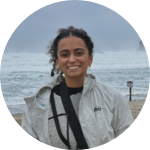
Runs field microscopy and reads samples at the screening table, where the diagnostics meet the community.
Richa John
Medical student, designer, women's health advocate
Thomas Copeland
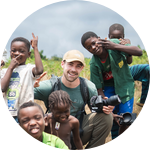
Thomas Copeland is an adventure and expedition photographer whose work focuses on the intersection of exploration, environmental issues, and global health. He is dedicated to inspiring others and raising awareness through visual storytelling, documenting the individuals who risk their lives in pursuit of exploration, particularly in the fields of medical and scientific research. A wilderness first responder and member of the The Explorers Club, Thomas brings an expedition-minded approach to documenting research, conservation, and exploration in remote environments.
Daniel Amao
Daniel Amao is an energetic, ambitious Person who over the years has extensively developed himself in photography and cinematography through Personal effort and online training.
He has actively been searching for opportunities in areas where he can utilize his knowledge, competently apply his skills and further develop his creative abilities.
Siddhant Patil
Medical student, designer, global health advocate
Jon Beaubrun
Jon is a chemical engineer with experience working in the semiconductor industry as an engineer focused on technology transfer and high volume manufacturing of transistors. Jon also has experience with technology de-risk and scale-up in controlled environment agriculture working on projects ranging from vetting novel sensing technologies to scaling from R&D/pilot to commercial scale production.
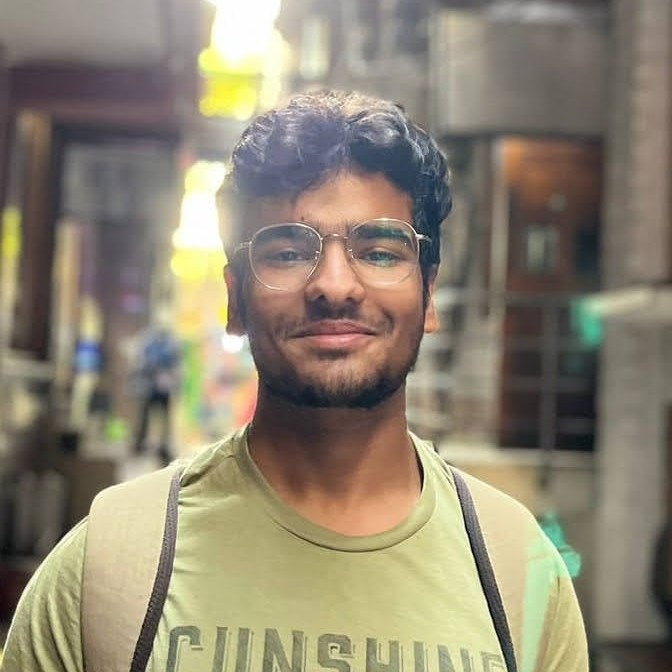
Vaibhav Shokeen
Vaibhav is a computer science undergraduate student at Ashoka University, Sonipat. He is interested in automatizing inefficient manual tasks in the medical field and especially passionate about developing strategies and solutions to tackle the air pollution problem.
Simon Birk
Simon Birk is a medical student at McGovern Medical School deeply involved in community health and advocacy. He currently serves on the board of directors of Texas Physicians for Social Responsibility, an environmental advocacy group that aims to elevate the physician perspective in discussions of environmental health. His work includes time as a team member of Texas 4000 for Cancer, a student-led advocacy organization engaged in the support of cancer research and patient support programs, as well as time on the Oxford Coronavirus Government Response Tracker (OxCGRT) team quantifying and evaluating government policy approaches to the COVID-19 pandemic. Simon holds a deep appreciation for the importance of environmental stewardship for Human wellbeing that has been fortified by his various leadership and research experiences. He sees the physician perspective as crucial in systemically tackling today’s relevant health challenges and bolstering health equity throughout Texas, the United States, and across the globe.
Additional Information
Our team spans the people who make this work possible: Dr. Uwem Ekpo, a parasitologist with 20 years on the Oyan River, and Dr. Soneye Islamiat, Ogun State's schistosomiasis control lead, who opened the door to these communities. Regulatory oversight and research ethics are led by Tope Olubodun, a physician at Federal Medical Centre Abeokuta. We're mentored by Manu Prakash, co-inventor of the Foldscope, and disease ecologists at Stanford's Center for Human & Planetary Health. Education sessions are led by Dr. Cynthia Umunnakwe, a parasitologist with years of schistosomiasis education experience in Ogun State, and co-designer of Schisto & Ladders and Hidden Worlds games. Environmental efforts are overseen by Dr. Olubukola Adelakun, a DVM and zoonotic disease researcher who has extensive expertise in the snail hosts of the parasite.
Ethics and safety are of top priority: the study has local ethics approval, all diagnosis (For prevalence assessments) and treatment follow WHO guidelines, participation is voluntary with informed consent, media releases have been signed for all 2026 photographs and video for anyone being represented and during fieldwork we ask permission for study proceedings from every community leader with proper communication with community liaisons known as community mobilizers. Community health workers have been trained by our team in diagnosis, passing an accuracy test prior to study start, and are supervised by Ministry of Health staff throughout to ensure ready access to praziquantel for treating positive cases.
Project Backers
- 17Backers
- 44%Funded
- $1,760Total Donations
- $103.53Average Donation