About This Project
This expedition will explore the Amazon, Patagonia, and Antarctica by sailing and conducting water-based sampling. Using environmental DNA (eDNA) from water, we will track vertebrate biodiversity and reveal how climate change and human activity reshape ecosystems. Vertebrate diversity is expected to vary across regions, leaving detectable signatures in the eDNA. Local students and indigenous groups will join in citizen science, linking global research to community knowledge.
Ask the Scientists
Join The DiscussionWhat is the context of this research?
This study will use environmental DNA (eDNA) across the Amazon, Patagonia, and Antarctica to generate a census of vertebrate biodiversity. Many species disappear without being recorded due to deforestation, habitat changes, and melting ice (Alberta et al., 2023; Hobbs et al., 2024; Marquet et al., 2023). Since 1970, over 73% of wildlife biodiversity has declined (WWL., 2024). Aboard the sailing vessel Pangaea, we will collect water samples along the expedition route to detect a broad spectrum of aquatic and terrestrial vertebrates. Environmental DNA is a fast, cost-effective, non-invasive, and reliable method, even in extreme environments such as Antarctica (Martinelli Marín et al., 2024). Human activity and climate change shape vertebrate life across regions, reducing species richness in deforested Amazon areas, warming waters, and polluted habitats. Using standardized eDNA methods, we will test how global drivers shape biodiversity and establish a baseline for future monitoring.
What is the significance of this project?
Climate change is reshaping fragile ecosystems at a rate faster than we can track them. Species are vanishing with little record of when or why they are disappearing. This expedition offers a rare chance to change that. By sailing through the Amazon, Patagonia, and Antarctica, we will use environmental DNA (eDNA) to reveal hidden biodiversity that traditional surveys often miss. Because eDNA can detect both aquatic and terrestrial animals from a simple water sample, it provides a powerful, non-invasive method for uncovering changes before they go unnoticed. Our project will establish the first comprehensive baseline of vertebrate biodiversity across these regions, knowledge that is urgently needed to inform future conservation efforts.
What are the goals of the project?
This expedition combines science, storytelling, and community engagement to document biodiversity and inspire conservation. We will collect and analyze ~350 water samples across the Amazon, Patagonia, and Antarctica, using environmental DNA (eDNA), to establish the first comparative biodiversity baseline across these three regions. Through vertebrate presence and absence data, we aim to detect patterns of species loss and the impact of climate change. At the same time, we will engage and train local students and communities in eDNA methods to support ongoing monitoring. Finally, we will share results through open-access databases, peer-reviewed publications, and public storytelling platforms.
Budget
Funding will support critical aspects of this project, including field research, molecular analysis, and citizen science initiatives.
Endorsed by
 Project Timeline
Our project is structured into four phases. Amazon (Nov 2025–Feb 2026): We will collect samples, process eDNA, and share preliminary results with local partners. Patagonia (Jun –Sep 2026): We will sample fjords/rivers, process eDNA, and share interim results. Antarctica (Nov 2026–Feb 2027): We will collect and process Antarctic samples and share initial findings via a biodiversity report. In April 2027, we will finalize analyses, publish results, and launch global outreach/storytelling content.
Oct 17, 2025
Project Launched
Nov 25, 2025
Travel to Manaus & Puerto Nariño, sample rivers, Lake Tarapoto, and Loreto
Jan 12, 2026
Process Amazon samples
Feb 16, 2026
Share Amazon's preliminary results with local NGOs and schools
Jun 16, 2026
Collect eDNA in fjords, Tierra del Fuego, Cape Horn, Torres del Paine
Meet the Team
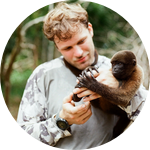
Austin Blakeslee
I’m working towards my PhD at Nova Southeastern University, where I study biodiversity and conservation using environmental DNA (eDNA). My research focuses on understanding how climate change and anthropogenic impacts shape ecosystems.
I will lead an eDNA biodiversity survey across the Amazon, Patagonia, and Antarctica as part of explorer Mike Horn’s expedition, building one of the most extensive efforts ever attempted in these regions.
Beyond the science, I’m passionate about connecting people with conservation.
Lab Notes
Nothing posted yet.
Project Backers
- 24Backers
- 85%Funded
- $4,250Total Donations
- $177.08Average Donation