About This Project
Building upon previous work showing that compound I from cytochome P450 monooxygenase can oxidize methane, we will employ quantum mechanics, molecular dynamics simulations and bioinformatics methods to design more efficient enzymes. Combined with experimental validation and machine learning methods, the knowledge gathered in P450 will be transferred to unspecific peroxygenases that can be secreted by the yeast P. pastoris, thereby decreasing cost of expensive cofactors and protein purification.
Ask the Scientists
Join The DiscussionMotivating Factor
Novel technology for methane removal (MR) at 1-100 MtCH4 scale is needed, particularly for oxidizing atmospheric concentrations (2 ppmNASEM, 2024, Abernethy, 2024) and emissions at 2-1000 ppm that are too dilute to be scalably oxidized with existing technology (Abernethy, 2023).
Several MR strategies have been proposed that would leverage biological CH4 oxidation in engineered contexts. One example is methane oxidation bioreactors (Lidstrom, 2024); another is engineered crops or managed trees expressing methane monooxygenase (MMO) in their leaves or roots, which could oxidize it in soil or ambient air (Strand et al. 2022, Spatola Rossi et al. 2023).
Development of MMO-bearing plants or optimizing CH4 oxidation in reactors will require engineering, heterologous expression, and/or or context-specific characterization of MMO. But significant challenges limit such manipulation of MMO (Tucci, 2024; Rosenzweig, 2025; Reginato, 2024), preventing progress for new technologies.
Specific Bottleneck
Expression of functional MMO in heterologous hosts is challenging. Particulate MMO (pMMO) is a membrane-bound multi-subunit complex. The biophysical conditions and electron delivery pathways needed for high MMO activity are undetermined and coupled to host biology (Tucci and Rosenzweig 2024). Heterologously-expressed pMMO has low or no activity (Spatola Rossi, 2023). The PmoC subunit of pMMO is toxic (Stolyar 1999), preventing generation of mutant libraries and substantially hindering efforts to engineer and study pMMO.
The soluble MMO (sMMO) is also a multi-subunit complex, but its expression is hindered by the need for chaperones (Zill, 2022; Bennett, 2021). sMMO activity was achieved in E. coli (Bennett, 2021), but the activity is low and host-specific.
Thus, novel "out-of-the-box" ideas to design more active, soluble and transferable MMOs to other organisms are urgently needed.
Actionable Goals
De novo MMO enzymes should be developed that achieve high methane oxidation rates and can function across diverse heterologous hosts. De novo MMOs would ideally be non-toxic single-domain monomeric proteins that rely minimally on host-specific biology for function, including folding and electron delivery.
The mechanism by which the de novo MMO will obtain the reducing equivalents required for methane oxidation is critically important. Exploring alternative scaffolds and active sites from metalloenzymes that can oxidize methane might be used to inform other aspects of protein design.
Budget
Total budget is for a salary for 1 year of a research assistant, computer infrastructure, lab consumables, essential travel and university overhead.
Meet the Team
Affiliates

Affiliates
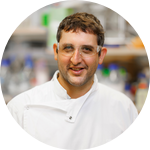
Carlos Acevedo-Rocha
Dr Acevedo-Rocha leads the “Computational Protein Engineering” group at The Novo Nordisk Center for Biosustainabiltiy at the Technical University of Denmark. He researches how protein sequences determine structure and function. In particular, his group combines state-of-the-art experimental and computational approaches to understand and engineer proteins and enzymes to create more sustainable biosolutions for society while protecting the environment and human health. Previously, he worked at the Danish biotech company Biosyntia where he co-developed the world-first processes to produce B vitamins using renewable feedstocks (instead of fossil fuels). Before moving to Denmark, he took a postdoctoral position with Manfred Reetz, a pioneer in protein directed evolution and biocatalysis at the University of Marburg, Germany. He did his PhD in biotechnology in the area of genetic code expansion at the lab of Ned Budisa at the Max Planck Institute of Biochemistry near Munich, Germany. Carlos is well-known for developing innovative methods to engineer proteins using directed evolution. He has 5 patents and over 60 scientific publications in the areas of directed evolution, biocatalysis, metabolic engineering, bioinformatics, and machine learning. Currently, he supervises a culturally diverse, international and interdisciplinary team composed of 5 postdocs, 5 PhD students, 5 ressearch assistants as well as many MSc and BSc students.
Yosephine Gumulya
Dr Yosephine Gumulya is a Future Academic Leader in the School of Agriculture and Food Sustainability (AGFS) at the University of Queensland (UQ). She also leads a group at the UQ Biosustainability Hub in Australian Institute for Bioengineering and Nanotechnology. Her academic journey began after completing her PhD at the Max Planck Institute under Prof Reetz in protein engineering, Dr Gumulya joined UQ as a postdoctoral fellow where she developed novel tools for engineering highly thermostable and promiscuous enzymes. In 2016, she was awarded the prestigious Endeavour Scholarship to visit the lab of Prof Frances Arnold, a Noble Laureate in Chemistry, at Caltech in US. She then joined Commonwealth Scientific and Industrial Research Organisation (CSIRO) as Research Scientist, focusing on engineering microbes for metal leaching from low grade ores. In 2021, she moved to Queensland University of Technology as Senior Research Postdoctoral Research fellow, focusing on methane mitigation and gut microbiome engineering. In 2024, she returned to UQ as Future Academic leader. Her research focus on using synthetic and system biology approaches to engineer proteins, microbes and microbiomes. She has successfully secured $2.5 M in funding from National Health and Medical Research Council (NHMRC), CSIRO, the Food and Beverage Accelerator program, ARC Centre of Excellence, and multiple industry partners. She has published over 32 peer-reviewed journal articles and holds three patent applications in protein engineering. She has co-supervised more than six PhD candidates and supervised numerous master’s students. Dr Gumulya is a member of the Australian Society for Biochemistry and Molecular Biology and serves on the AGFS Early and Mid-Career Academics Committee. She frequently speaks at national and international conferences and symposiums, reflecting her role as an emerging academic leader in protein engineering.
Sílvia Osuna
Prof. Osuna is an ICREA research professor at the Institut de Química Computacional i Catàlisi (IQCC) at the Universitat de Girona (UdG). Her research is based on the rational design of enzymes. Osuna received her PhD in 2010 from UdG at the Institut de Química Computacional (IQC). In 2010, she moved to the group of Prof. Houk at the University of California, Los Angeles (UCLA) with a Marie Curie postdoctoral fellowship where she started to work on the computational design and modelling of enzymes. Her group was created thanks to the awarded 2015 European Research Council project - Starting grant project (ERC-2015-StG-679001) and focuses on the development of new computational tools and approaches for computational enzyme design. Sílvia has more than 100 research publications, and has been recently awarded the 2023 Young Spanish National Award in Chemistry, 2021 EuChemS lecture award, the Catalan National Research Award – Young Talent 2019 from Fundació Catalana de Recerca i Innovació (FCRi), among others. Her group is currently funded by a European Research Council project - Consolidator Grant, two ERC- Proof of Concept grants, and two I+D Spanish MINECO projects. She has supervised many undergraduate and master’s students, as well as 10 PhD students and is supervising 8 PhD candidates. She has established important collaborations with major players in the field of biocatalysis and enzyme engineering/enzyme evolution, such as Prof. Manfred Reetz, Prof. Sabine Flitsch, Prof. Nicolas Turner, Prof. Romas Kazlauskas, Prof. Bernhard Hauer and Prof. Reinhard Sterner, among others. Her research as independent researcher has uncovered the importance of conformational dynamics of enzyme catalysts and its relevance for enzyme function. Most importantly, Osuna contributed significantly to the advancement of available computational methods for enzyme design.
Esteban Marcellin
Professor Esteban Marcellin is a leading researcher in microbial engineering, bioprocess optimization, and synthetic biology. His work focuses on advancing industrial biomanufacturing by developing high-performance microbial strains and scalable bioprocesses. As a professor at the University of Queensland (UQ), he plays a key role as founding Director of the UQ Biosustainability Hub, driving innovations that transition big emitters to net zero using renewable feedstocks.
Professor Marcellin has a strong track record of industry collaboration, particularly with Lanzatech, Calysta and Windfall Bio with whom he has worked since 2012, 2018 and 2024 contributing to the successful commercialization of gas fermentation technologies. His expertise in systems biology, automation, and gas fermentation has positioned him as a key figure in industrial biotechnology. His group, now exceeding 40 members, integrates synthetic biology and engineering to develop sustainable biomanufacturing solutions.
Professor Marcellin is deeply involved in translating research into impact. His leadership has been instrumental in securing major investments like the ARC Centre of Excellence in Synthetic Biology. His contributions extend beyond academia, fostering partnerships that drive innovation and sustainability in biomanufacturing, precision fermentation, and synthetic biology.
Additional Information
This work builds upon a previous collaboration between Silvia Osuna (computational enzyme design) and Carlos Acevedo-Rocha (enzyme engineering and biocatalysis), but also builds upon a new collaboration with Esteban Marcellin and Yosephine Gumulya, experts in gas fermentations and directed evolution.
Importantly, this is a project that requires both computational and experimental work to advance mechanistic knowledge for methane oxidation. The outcome won't translate immediately to a highly efficient enzyme, but we will generate a proof-of-concept showing that P450s can perform this reaction even though producing P450s is very expensive because they need oxygen and electrons provided from cofactors that are expensive to produce. Therefore, we plan to transfer the knowledge from P450s obtained in a bacterium (E. coli) to another class of more promising enzyme called unspecific peroxygenases or UPOs that can be produced relatively cheaper in fungi (secretion) and that only needs H2O2 as electron and oxygen donor. Thus, this is a long term project that requires hybrid work to be successful.
Project Backers
- 0Backers
- 100%Funded
- $100,000Total Donations
- $0Average Donation