About This Project
Up to 70% of California’s beaches could vanish by 2100, yet we lack the data to respond. The Moving Shoreline Project combines drone-based coastal mapping with community engagement to track where San Francisco's Ocean Beach is changing—and how people’s values shift as they witness it. We hypothesize that when residents directly observe and measure coastal change, their understanding and prioritization of beaches as climate adaptation assets measurably increase.
Ask the Scientists
Join The DiscussionWhat is the context of this research?
Up to 70% of California’s beaches may disappear by 2100 due to sea level rise and disrupted sand flows (Vitousek, et al, 2023).
Federal shoreline monitoring budgets have collapsed, leaving behind a fragmented landscape of technical reports, academic studies, and outdated hazard maps. The result? Neither community members nor local decision-makers have the information they need to prioritize, plan or respond to shrinking beaches.
This project was inspired by surfing and walking Ocean Beach for over a decade. As a scientist, I knew how quickly it was changing. But as a citizen, I also knew how invisible that change was for the community. Aerial imagery and Structure-from-Motion (SfM) photogrammetry, which reconstructs detailed 3D models from aerial photos (Warrick et al, 2017), offer a way to visualize that change with striking clarity.
This project also brings clarity to the community by making a beach's disappearance visible.
What is the significance of this project?
The Moving Shoreline Project tests a new model of “community-scale climate sensing.” We’re not only mapping where the beach is retreating, we’re also asking how those visualizations change people's understanding and values. Do people prioritize a disappearing landscape differently when they can see it? When they help map it?
Understanding these human responses is essential to climate adaptation. By pairing geomorphological monitoring with qualitative interviews and pop-up exhibits, we’re exploring not just where the sand is going, but also how community priorities can shift in response.
If communities can clearly see what’s at stake, they may be more motivated and better equipped to protect what’s still possible to save. This is urgent, local, and scalable work.
What are the goals of the project?
This project will document seasonal changes along 4 miles of Ocean Beach using drone surveys, RTK GPS, and Structure-from-Motion photogrammetry to create high-resolution 3D models of dune and beach movement. Red-blue change maps will be used to visualize erosion and accretion after winter storms.
Community volunteers will assist in fieldwork and then engage with results through mobile exhibits and pop-ups at schools, cafes, and libraries. We’ll also conduct qualitative interviews with participants and passersby to explore how exposure to these visualizations influences their awareness, values, and priorities around beach conservation.
All data collection and public engagement will be completed within 12 months, creating both an open-source change dataset and insights into how communities respond to disappearing coastlines. With this foundation, we aim to build a replicable model for community-driven shoreline monitoring and adaptation.
Budget
This budget equips us to run a rigorous, community-powered monitoring effort.
Our drone and mounts let us safely and repeatedly collect aerial imagery across the 4-mile stretch of Ocean Beach. Outreach materials (including posters, pop-up exhibits, and handouts) translate these technical outputs into clear, emotional, and accessible visualizations. Training and gear for volunteers support hands-on participation and help build local monitoring capacity. Audio recorders and transcription services allow us to track how people’s perspectives change as they interact with the data.
Altogether, these tools help us fill two urgent gaps: understanding where the shoreline is changing, and understanding how that change can move people to care, act, and advocate.
Endorsed by
 Project Timeline
We’ll begin equipment setup and volunteer training in January 2026. Seasonal beach surveys will take place after major winter storms (Jan–Mar), with post-storm visualizations shared in pop-up exhibits by spring. Summer will focus on interviews and additional monitoring. All fieldwork and community engagement will conclude by October 2026, with analysis and publication of findings finalized by the end of the year.
Nov 19, 2025
Project Launched
Jan 12, 2026
Project Kickoff
Jan 21, 2026
First Survey & Storm Response Mapping
Apr 18, 2026
Public Exhibits & Pop-Up Rollout
Jul 25, 2026
Community Climate Insights Collection
Meet the Team
Chase Davenport
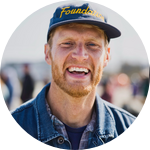
Chase Davenport is a dedicated teacher, scientist, builder, and and lover of San Francisco's Ocean Beach.
Chase began his career as a Teach for America Kindergarten teacher in Richmond, California. His passion for education led him to pursue a PhD in Human Development at UC Berkeley. Chase was also an Artificial Intelligence Researcher on the Sustainable Technologies team at Accenture and a wooden surfboard builder at Hess Surfboards.
Over time, Chase's personal and professional interests converged on beaches. His formal education in Coastal Science and Policy at UC Santa Cruz equips him with the knowledge to understand coastal systems and his experiences as a teacher and builder enable him to form connections between these systems. Chase started the Ocean Beach Institute to sustain beaches and the communities that depend on them.
Lab Notes
Nothing posted yet.
Additional Information
Here is a link to our page on how Structure from Motion creates visuals to understand coastal change. Here is a link on The Moving Shoreline Project.
Project Backers
- 1Backers
- 2%Funded
- $100Total Donations
- $100.00Average Donation