About This Project
A team of scientists and indigenous sailors are embarking on a voyage from Majuro atoll to the atoll of Aur to document and preserve crucial indigenous knowledge in the Marshall Islands. Deploying cutting-edge technologies, this project aims to understand how Marshallese sailors navigate the vast Pacific Ocean, advancing both scientific knowledge and cultural preservation. Studying Marshallese cognition will further our understanding of human potential in extreme environments.
Ask the Scientists
Join The DiscussionWhat is the context of this research?
The indigenous navigators of the Marshall Islands – the Ri-Meto – are famed for having an extraordinary ability: wave piloting. They learn to detect subtle changes in ocean swells, enabling them to ‘sense’ islands 50km beyond the horizon and find their way. Wave piloting represents an incredible achievement of human intelligence, yet it remains largely unexplored by science. Neuroscience has long studied land-based navigation, but the ocean presents an entirely different and more complex challenge. How do indigenous sailors orient themselves in an ever-changing environment? What can their knowledge teach us about the human brain, resilience, and the potential of human abilities? We aim to answer these questions by bringing together world-leading scientists and indigenous Marshallese sailors in a groundbreaking voyage of discovery.
What is the significance of this project?
The devastating nuclear testing in the Marshall Islands displaced entire communities, eroding cultural traditions and indigenous knowledge vital for a sustainable future. Thus, this expedition has deep scientific, cultural, and societal significance. Research co-creation and community engagement are at the heart of the project, ensuring that our work benefits the Marshallese people. Today, climate change threatens the very existence of these low-lying atolls. Supporting this project means investing in resilience and empowering Marshallese youth through the preservation of ancestral skills that hold critical environmental use for their future.
We have secured funding for research travel and equipment, and we are now fundraising for a community event at Aur, the final destination of the voyage. The event includes the sharing of food (following traditional customs), as well as a series of games and citizen science activities.
What are the goals of the project?
Navigation is a fundamental cognitive capacity, but our current conception of it is narrowly based on Global North participants in laboratory experiments. Marshallese navigation offers radically different ways of understanding how humans find their way through the world. And by documenting indigenous traditions, we help safeguard a valuable part of human heritage—ensuring these skills are not lost and can continue to inform and inspire future generations.
During the voyage, we will be periodically collecting directional pointing data and distance and time estimates. This will include eye tracking data, both qualitative and quantitative data, video recordings, and environmental measures, such as accelerometer data. We will also be piloting the use of mobile EGG at sea. Thorough documentation of Marshallese navigation can help us build cognitive models of how wayfinding unfolds in the ocean, and it also serves as a repository for cultural transmission.
Budget
We have managed to secure funding for travel and research equipment. We are now raising funds for a community event at Aur, which is the final destination of our expedition. The event will involved food for the community (following Marshallese traditions), as well as games and citizien science.
The event will include navigation-themed games (e.g.blindfolded pointing) and the video game Sea Hero Quest, both in tablets and in VR headsets. Sea Hero Quest is a multi-platform adventure game designed specifically to help advance the understanding of spatial navigation. In it, players have to pilot a boat through different marine and riverine environments, and find their way to various checkpoints.
Endorsed by
 Project Timeline
The research voyage will take place in July and August of 2025.
To remain flexible, which is very much needed for doing science in the open ocean, the experimental protocol is based around rich data collection and simple, recurrent tasks (e.g. pointing).
We plan to share the outcomes of the project with our backers as field notes, from the landing, to the voyage start, to our event in Aur, and later on, from data pre-processing and analysis, to the pre-prints outlining our study results.
Jul 08, 2025
Project Launched
Jul 20, 2025
Maria Ahmad arrives to the Marshall Islands
Jul 30, 2025
Full team in the Marshall Islands
Aug 01, 2025
Expedition takes off
Aug 03, 2025
Community event at Aur
Meet the Team
Affiliates
Scientists from University College London, Harvard and Hawaii University are partnering with Waan Aelon in Majel (WAM), a Marshallese canoe-building school led by Alson Kelen, an apprentice of the last known Ri-Meto master navigator. WAM plays a crucial role in passing down traditional skills, fostering local leadership, and equipping Marshallese youth with the tools they need for a sustainable future.
Full list of team members: https://spierslab.wixsite.com/...
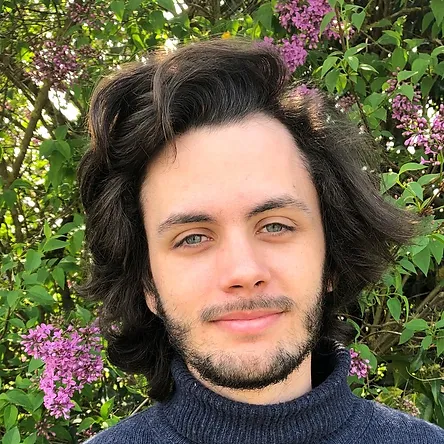
Pablo Fernandez Velasco
I work on philosophy of mind and cognitive science, and a big aspect of my research lies in interdisciplinary collaboration. I see philosophy both as a way of advancing interdisciplinary work through the development of solid theoretical foundations, and as a way of connecting scientific advances to pressing social issues. I am particularly interested in navigation and in environmental experience, and my current research explores ecological grief. I have published academic articles in top journals across a variety of disciplines, and my work has received media attention in venues including BBC, The Guardian, Irish Times, Le Monde, and New Scientist.
Maria Ahmad
After completing a master’s in clinical neuroscience at UCL, I spent the next six years living in the Marshal Islands. I learnt about their culture and the devastating impact nuclear testing has had on their traditional way of life. What fascinated me the most was learning about their extraordinary ability to interpret ocean swell patterns when navigating across hundreds of kilometres of seemingly featureless sea. This is known as 'Wave Piloting'. During my PhD I aim to uncover how Marshallese sailors build a spatial representation of the ocean and what this can tell us about spatial cognition. Through this project I aim to highlight the value of Indigenous knowledge.
Hugo Spiers
Hugo Spiers is Professor of Cognitive Neuroscience, and a Vice Dean for Enterprise, at University College London (UCL). He has over 25 years of research experience in neuroscience and psychology studying how our brain recalls the past, navigates the present and imagines the future. He has published over 100 academic articles and received numerous awards including the Charles Darwin Award from the British Science Association and a James McDonnell Foundation Scholar Award. He is co-director of the International Centre for NeuroArchitecture and NeuroDesign, a Fellow of the Royal Institute of Navigation, a Lighthouse Fellow of the Centre for Conscious Design and the Vice Chair of the Academy of Neuroscience for Architecture in the UK. His research project Sea Hero Quest has tested over 4 million people in 195 nations on their navigation ability, providing a powerful benchmark for assessment in Alzheimer's disease and global insight into cognition.
Additional Information
This project has been supported by the Royal Institute of Navigation, University College London and the Centre for the Sciences of Place and Memory at the University of Stirling (funded by the Leverhulme Trust), Glitchers, Nomadic School of Business, Neuroscience & Design, and Brunton.
Photo: Chewy Lin
Project website: https://spierslab.wixsite.com/...
Project Backers
- 57Backers
- 139%Funded
- $4,181Total Donations
- $73.35Average Donation