

Please wait...
About This Project

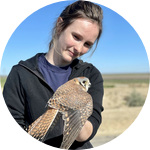
American Kestrels in the US have declined by 50% in the last 50 years and scientists are struggling to understand why. Increasingly kestrels are reliant on agricultural landscapes, yet little is known about how these landscapes affect their wintering diet. My study will be the first to comprehensively characterize the diet of wintering kestrels using novel genomic tools and will compare diet composition to crop type in order to provide data for both kestrel conservation and sustainable land use.
More Lab Notes From This Project

Browse Other Projects on Experiment
Related Projects
Sequencing genomes to develop a genetic tool and support conservation of the endangered Bermuda cedar
Less than 5% of Bermuda's original cedars survived an insect outbreak in the mid-20th century. In response...
Hidden in plain sight: Discovering the macro lichens of the American Southwest and Northern Mexico
The American Southwest and northern Mexico harbor remarkable lichen diversity, yet many regions remain poorly...
How can a cheap scanner reveal hidden signals in living soil?
Soil looks like one brown background, but water, minerals, organic matter, roots, fungi, bacteria, and decaying...
