Mar 24, 2025
80
0
1
References
- 1. Ganoe LS, Brown JD, Yabsley MJ, Lovallo MJ, Walter WD. A review of pathogens, diseases, and contaminants of muskrats (Ondatra zibethicus) in North America. Frontiers in Veterinary Science. 2020;7:233.
- 2. Ganoe LS, Brown JD, Yabsley MJ, Lovallo MJ, Walter WD. A review of pathogens, diseases, and contaminants of muskrats (Ondatra zibethicus) in North America. Frontiers in Veterinary Science. 2020;7:233.
- 3. Ganoe LS, Brown JD, Yabsley MJ, Lovallo MJ, Walter WD. A review of pathogens, diseases, and contaminants of muskrats (Ondatra zibethicus) in North America. Frontiers in Veterinary Science. 2020;7:233.
- 4. Kügeler, C., Meier, M., Rosezin, R., Gilles, S., & Waser, R. (2009). High density 3D memory architecture based on the resistive switching effect. Solid-state electronics, 53(12), 1287-1292.
- 5. Telford III, S. R., & Goethert, H. K. (2020). Ecology of Francisella tularensis. Annual review of entomology, 65(1), 351-372.
- 6. Mani, R. J., Metcalf, J. A., & Clinkenbeard, K. D. (2015). Amblyomma americanum as a bridging vector for human infection with Francisella tularensis. PLoS One, 10(6), e0130513.
- 7. García, J. A., Navarro, M. A., Fresneda, K., & Uzal, F. A. (2022). Clostridium piliforme infection (Tyzzer disease) in horses: retrospective study of 25 cases and literature review. Journal of Veterinary Diagnostic Investigation, 34(3), 421-428.
- 8. Brooks, J. W., Whary, M. T., Hattel, A. L., Shaw, D. P., Ge, Z., Fox, J. G., & Poppenga, R. H. (2006). Clostridium piliforme infection in two farm-raised white-tailed deer fawns (Odocoileus virginianus) and association with copper toxicosis. Veterinary Pathology, 43(5), 765-768.
- 9. Ikegami, T., Shirota, K., Une, Y., Nomura, Y., Wada, Y., Goto, K., ... & Fujiwara, K. (1999). Naturally occurring Tyzzer's disease in a calf. Veterinary pathology, 36(3), 253-255.
- 10. Neto, R. T., Uzal, F. A., Hodzic, E., Persiani, M., Jolissaint, S., Alcaraz, A., & Carvallo, F. R. (2015). Coinfection with Clostridium piliforme and Felid herpesvirus 1 in a kitten. Journal of Veterinary Diagnostic Investigation, 27(4), 547-551.
- 11. Raymond, J. T., Topham, K., Shirota, K., Ikeda, T., & Garner, M. M. (2001). Tyzzer's disease in a neonatal rainbow lorikeet (Trichoglossus haematodus). Veterinary Pathology, 38(3), 326-327.
- 12. Sasseville, V. G., Simon, M. A., Chalifoux, L. V., Lin, K. C., & Mansfield, K. G. (2007). Naturally occurring Tyzzer's disease in cotton-top tamarins (Saguinus oedipus). Comparative medicine, 57(1), 125-127.
- 13. Smith, K. J., Skelton, H. G., Hilyard, E. J., Hadfield, C. T., Moeller, R. S., Tuur, S., ... & Angritt, P. (1996). Bacillus piliformis infection (Tyzzer's disease) in a patient infected with HIV-1: confirmation with 16S ribosomal RNA sequence analysis. Journal of the American Academy of Dermatology, 34(2), 343-348.
 Melinda like this.
 Please wait...
About This Project

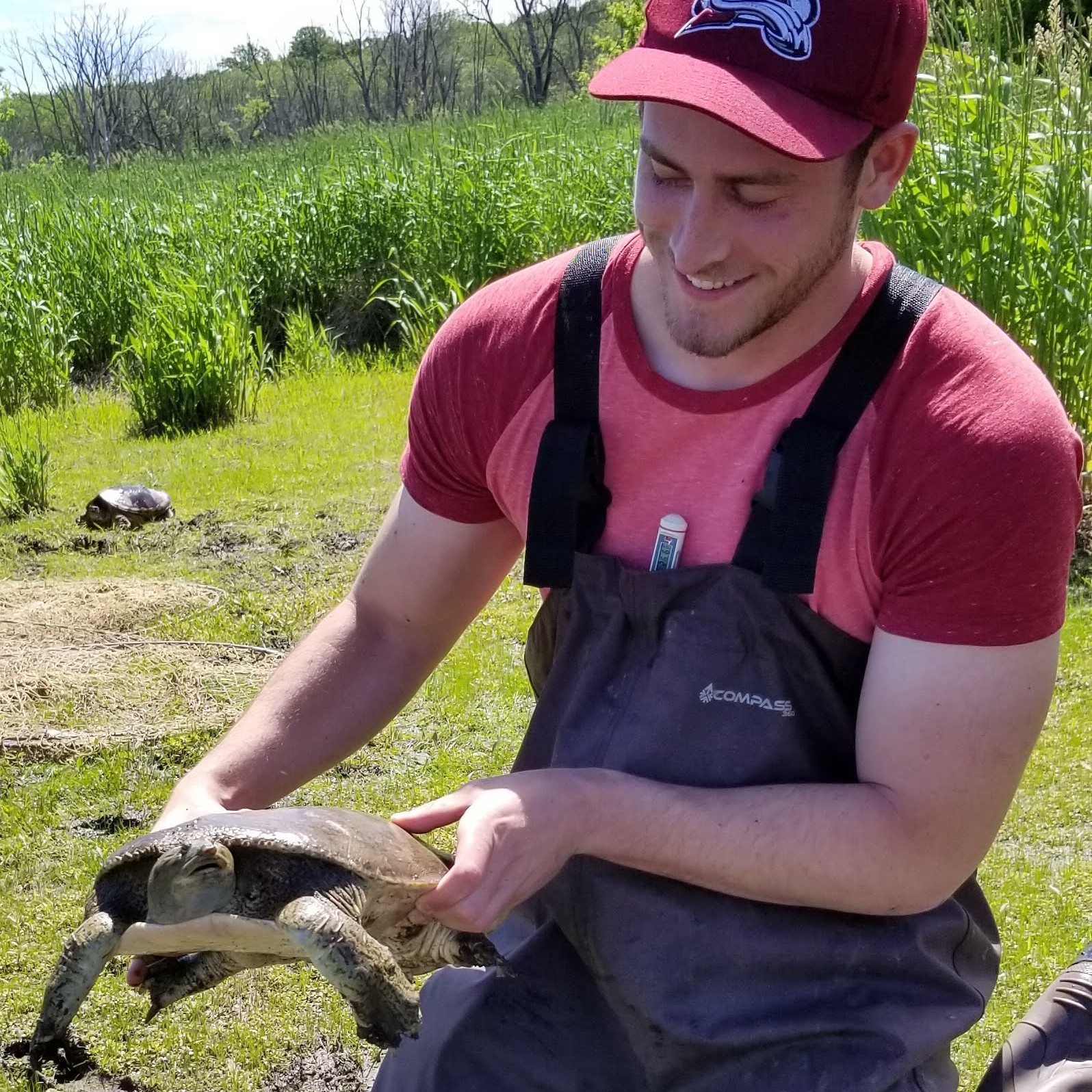
The muskrat, a charismatic semi-aquatic rodent, has experienced long-term declines across the United States dating back to the 1970s. The factors for this decline remain unclear. Our research will investigate health challenges in eastern US muskrat populations by determining the prevalence and distribution of pathogens and contaminants in these declining animals. The outcomes from our effort can provide context to observed declines and serve as a guide for management efforts of the species.

Browse Other Projects on Experiment
Related Projects
Sequencing genomes to develop a genetic tool and support conservation of the endangered Bermuda cedar
Less than 5% of Bermuda's original cedars survived an insect outbreak in the mid-20th century. In response...
Hidden in plain sight: Discovering the macro lichens of the American Southwest and Northern Mexico
The American Southwest and northern Mexico harbor remarkable lichen diversity, yet many regions remain poorly...
How can a cheap scanner reveal hidden signals in living soil?
Soil looks like one brown background, but water, minerals, organic matter, roots, fungi, bacteria, and decaying...
